

How Does the 2026 Ford F-150 Hybrid Truck Work?
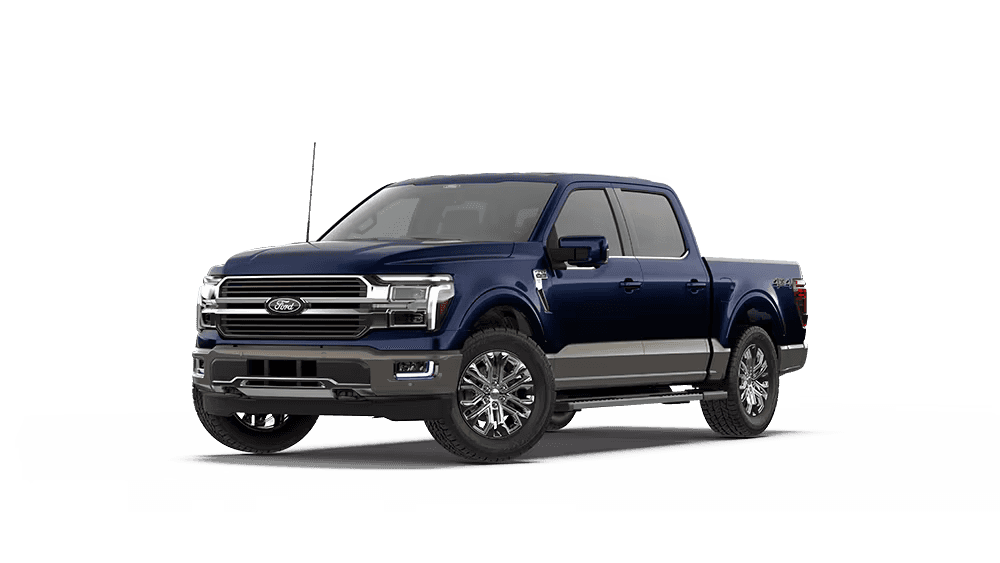
How does the 2026 Ford F-150 Hybrid work? The 2026 Ford F-150 PowerBoost combines a 3.5L EcoBoost V6 gasoline engine with an electric motor, hybrid battery, and electronic 10-speed automatic transmission. The system automatically uses gasoline power, electric assistance, or both depending on what the truck needs at that moment.
The result is a full-size hybrid pickup that produces 420 horsepower and 570 lb-ft of torque and can tow up to 11,600 pounds when properly equipped. The hybrid system can also supply electricity through Ford Pro Power Onboard, giving the F-150 another kind of capability beyond towing and hauling.
And unlike a plug-in hybrid or fully electric truck, the 2026 Ford F-150 PowerBoost does not need to be plugged in. The truck manages its hybrid battery while you drive, including recovering energy through regenerative braking.
Below, the team at Essential Ford of Stuart explains how the 2026 F-150 PowerBoost works, what the electric motor actually does, how the battery recharges, how much it can tow, and why Pro Power Onboard can be especially useful for Treasure Coast truck owners.
Ready to compare configurations? Browse new Ford F-150 inventory at Essential Ford of Stuart.
2026 Ford F-150 PowerBoost Hybrid at a Glance
| PowerBoost Feature | 2026 Ford F-150 Hybrid |
|---|---|
| Powertrain | 3.5L PowerBoost Full Hybrid V6 |
| Horsepower | 420 hp |
| Torque | 570 lb-ft |
| Transmission | Hybrid electronic 10-speed automatic |
| Maximum towing | Up to 11,600 lbs. when properly equipped |
| Maximum available payload | Up to 1,740 lbs. with the PowerBoost powertrain |
| Pro Power Onboard | Up to 7.2 kW depending on configuration |
| External charging required? | No |
Towing, payload, Pro Power Onboard output, and equipment vary by configuration. Always verify specifications for the exact truck you are considering.
What Is Ford PowerBoost?
PowerBoost is Ford’s full-hybrid powertrain available for the F-150.
Instead of replacing the gasoline engine, PowerBoost combines a turbocharged 3.5L EcoBoost V6 with an electric motor and high-voltage hybrid battery.
That gives the truck two sources of propulsion.
Depending on speed, accelerator input, load, battery charge, and other conditions, the F-150 can use:
- Gasoline-engine power
- Electric assistance
- A combination of gasoline and electric power
- Regenerative braking to recover energy when slowing down
The truck manages these transitions automatically.
You do not have to select gasoline or electric power every time you accelerate, and you do not need to manually manage the hybrid battery during normal driving.
That is one reason the PowerBoost can feel familiar to someone coming from a conventional F-150 even though there is considerably more happening behind the scenes.
How Does the 2026 F-150 Hybrid Engine Work?
The 3.5L EcoBoost V6 remains a major source of power, but the hybrid electric motor can work alongside it.
During acceleration, towing, or other situations where additional torque is useful, electric assistance can supplement the gasoline engine.
Together, the system produces 420 horsepower and 570 lb-ft of torque.
That high torque output is important because PowerBoost is not designed simply as an economy-focused version of the F-150. Ford engineered the hybrid system to support the towing, hauling, and everyday performance expected from a full-size pickup.
The truck’s electronic controls continuously consider factors such as:
- Vehicle speed
- Accelerator position
- Hybrid battery charge
- Engine load
- Towing demands
- Driving conditions
- Selected drive mode
The system then determines how to combine gasoline and electric power.
Does the 2026 Ford F-150 Hybrid Need to Be Plugged In?
No. The 2026 F-150 PowerBoost is not a plug-in hybrid.
You refuel it with gasoline much like another F-150. There is no requirement to install a home charger or connect the truck to a public charging station.
The hybrid battery is managed by the vehicle itself.
Part of that energy comes from regenerative braking, which allows the truck to recover some energy that would otherwise be lost as heat when slowing down.
That means PowerBoost can give drivers the benefits of a gasoline-electric hybrid system without requiring a separate charging routine.
How Does Regenerative Braking Work?
Regenerative braking is one of the fundamental differences between a hybrid and a conventional gasoline-only truck.
When a traditional vehicle slows down, much of its kinetic energy ultimately becomes heat through the braking system.
A hybrid can recover some of that energy.
When the F-150 PowerBoost decelerates, the hybrid system can use the electric motor as a generator. Some of the truck’s motion is converted back into electrical energy and stored in the hybrid battery.
The truck still uses conventional friction brakes when needed. Regenerative braking works alongside them as part of the complete braking system.
For the driver, most of this happens automatically.
You simply accelerate, coast, and brake normally while the truck’s electronics decide when energy can be recovered.
Can the F-150 PowerBoost Drive on Electricity?
Under appropriate operating conditions, the full-hybrid system can use electric propulsion without the gasoline engine doing all of the work.
When more power is needed, the engine can restart and work with the electric motor.
The exact transitions depend on vehicle speed, battery charge, temperature, accelerator input, load, and other operating conditions.
This is different from the F-150 Lightning.
The Lightning is a fully electric pickup powered by a much larger battery and electric motors. PowerBoost is a gasoline-electric hybrid, so its electric system works together with the 3.5L EcoBoost V6 rather than replacing it.
How Powerful Is the 2026 Ford F-150 PowerBoost?
The 2026 PowerBoost Full Hybrid V6 is rated at:
- 420 horsepower
- 570 lb-ft of torque
That gives the PowerBoost considerably more torque than several conventional F-150 engine choices.
The electric portion of the powertrain is particularly useful because an electric motor can contribute torque immediately, complementing the turbocharged gasoline engine during acceleration.
For shoppers comparing the entire engine lineup, PowerBoost sits in an unusual position: it combines strong performance with hybrid technology and access to one of the F-150’s most useful productivity features, Pro Power Onboard.
For a broader look at the truck, see our 2026 Ford F-150 Buyer’s Guide for Treasure Coast drivers.
How Much Can the 2026 F-150 Hybrid Tow?
When properly equipped, the 2026 Ford F-150 PowerBoost can tow up to 11,600 pounds.
That gives the hybrid powertrain enough capacity for many:
- Boats
- Travel trailers
- Utility trailers
- Equipment trailers
- Work and landscaping equipment
For drivers around Stuart, Port St. Lucie, and the Treasure Coast, that can make PowerBoost especially useful for towing boats and recreational equipment while retaining the benefits of the hybrid system during everyday driving.
Maximum towing capacity does not apply to every PowerBoost truck.
The actual rating depends on factors including cab and bed configuration, axle ratio, towing equipment, drivetrain, passengers, cargo, and optional features.
Always verify the tow rating for the specific vehicle you plan to purchase.
You can learn more in our guide to Ford trucks for towing boats and trailers in Stuart.
What Is Pro Power Onboard?
One of the most interesting features of the F-150 PowerBoost has nothing to do with moving the truck.
Ford Pro Power Onboard allows the F-150 to provide electrical power for external tools and equipment.
Depending on trim and configuration, PowerBoost models can offer up to 7.2 kW of Pro Power Onboard output.
That can make the truck useful as a mobile source of power for:
- Power tools
- Battery chargers
- Work lights
- Camping equipment
- Tailgating equipment
- Computers and electronics
- Other compatible electrical devices
This is especially useful for contractors who may not have convenient electrical access at a job site.
It can also be valuable for camping and outdoor recreation, where the truck can provide electricity away from traditional outlets.
And for Florida owners, Pro Power Onboard can provide another source of electrical capability when storms or outages disrupt normal utility service.
Can an F-150 PowerBoost Help Power a Home During an Outage?
A properly equipped PowerBoost with the available 7.2-kW Pro Power Onboard system can supply substantial electrical output.
Ford has also introduced compatibility between appropriately equipped PowerBoost trucks and certain home transfer solutions, allowing the truck’s available 240-volt Pro Power Onboard output to support household circuits when properly installed and configured.
This should not be treated like simply plugging your house directly into the truck.
Connecting any generator or vehicle power source to a home’s electrical system requires the correct transfer equipment and installation procedures. Follow Ford instructions, applicable utility requirements, electrical codes, and professional installation guidance.
For Florida drivers, however, having this capability available from a truck can add a useful layer of preparedness during hurricane season and other extended outages.
What’s New for the 2026 F-150 PowerBoost?
For 2026, Ford expanded availability of the PowerBoost hybrid powertrain.
The 3.5L PowerBoost Full Hybrid V6 is now available on the STX, giving shoppers another way to get the hybrid system without moving directly into one of the F-150’s higher luxury trims.
Ford also continues to offer PowerBoost on other eligible configurations, including XLT, Lariat, King Ranch, and Platinum models depending on equipment.
Pro Power Onboard availability also varies by trim.
For example, Ford lists a 2.4-kW system as standard with the PowerBoost engine on King Ranch and Platinum, while the higher-output 7.2-kW system is available or included with certain equipment configurations.
For a closer look at the rest of this year’s changes, read our 2025 vs. 2026 Ford F-150 comparison.
Which 2026 F-150 Trims Offer PowerBoost?
The 3.5L PowerBoost Full Hybrid V6 is available on multiple 2026 F-150 configurations.
Availability depends on cab, equipment group, drivetrain, and other selections, but Ford lists PowerBoost availability across trims including:
- STX
- XLT
- Lariat
- King Ranch
- Platinum
That expanded availability means buyers do not have to choose the same equipment level simply because they want the hybrid engine.
A driver primarily interested in truck utility can choose differently from someone looking for leather seating, BlueCruise availability, premium audio, or higher-end interior materials.
If you’re comparing equipment, our 2026 F-150 package guide can help explain some of the available configurations.
Is the F-150 PowerBoost More Fuel-Efficient?
Fuel economy is one reason to consider a hybrid, but PowerBoost is different from a small hybrid car designed primarily around maximum MPG.
The F-150 is still a full-size pickup capable of towing and hauling substantial loads.
Its hybrid system can improve efficiency by recovering braking energy, providing electric assistance, and reducing the need for the gasoline engine to perform every task alone.
How much fuel you actually use will depend heavily on:
- Your exact F-150 configuration
- City versus highway driving
- Towing frequency
- Payload
- Vehicle speed
- Traffic
- Air-conditioning use
- Tire selection and pressure
- Driving habits
Stop-and-go driving can give the hybrid system frequent opportunities to capture energy through regenerative braking.
Towing a large trailer at highway speeds, by contrast, places considerably greater demand on the gasoline engine.
For that reason, compare EPA estimates for the exact configuration you are considering rather than assuming every PowerBoost F-150 will return the same MPG.
PowerBoost vs. EcoBoost: What’s the Difference?
The names sound similar, but they describe different powertrains.
| Feature | 3.5L EcoBoost | 3.5L PowerBoost |
|---|---|---|
| Gasoline engine | Twin-turbo V6 | Twin-turbo V6 |
| Hybrid electric motor | No | Yes |
| Regenerative braking | No | Yes |
| External charging | Not applicable | Not required |
| Maximum towing | Up to 13,500 lbs. when properly equipped | Up to 11,600 lbs. when properly equipped |
| Main advantage | Maximum F-150 towing capability | Hybrid operation, strong torque, and high-output Pro Power Onboard availability |
Neither is automatically the better powertrain.
The 3.5L EcoBoost is the configuration to investigate if maximum F-150 towing capacity is your main priority.
PowerBoost becomes particularly appealing if you want strong towing capability along with hybrid technology and the additional electrical utility of Pro Power Onboard.
F-150 PowerBoost vs. F-150 Lightning
Both trucks use electric power, but they operate very differently.
| Feature | F-150 PowerBoost | F-150 Lightning |
|---|---|---|
| Powertrain | Full hybrid | Fully electric |
| Gasoline engine | Yes | No |
| Needs external charging | No | Yes |
| Primary energy source | Gasoline plus electric assistance | High-voltage battery |
PowerBoost can be a natural choice for someone who wants electrified truck technology while continuing to refuel on longer trips the same way they would with a conventional pickup.
Drivers who want to eliminate gasoline entirely should look at the F-150 Lightning instead.
Is the 2026 F-150 PowerBoost Good for Florida Drivers?
The PowerBoost’s combination of truck capability and onboard electricity can be particularly practical on the Treasure Coast.
For example:
- Boat owners can use its substantial towing capability for many boat-and-trailer combinations.
- Contractors can use available Pro Power Onboard to operate compatible tools and equipment.
- Commuters benefit from a hybrid system that can recover energy during stop-and-go traffic.
- Campers and tailgaters gain access to electrical power away from a conventional outlet.
- Homeowners may value the available electrical output during storm-related outages.
PowerBoost is not necessarily the right F-150 for every buyer.
If you need the highest possible F-150 tow rating, another powertrain may make more sense. If your goal is to eliminate gasoline completely, consider an electric truck.
But if you want a traditional full-size pickup experience with added electric assistance and substantial onboard power capability, the PowerBoost occupies an interesting middle ground.
2026 Ford F-150 Hybrid FAQ
Is the 2026 Ford F-150 PowerBoost a real hybrid?
Yes. PowerBoost is a full-hybrid powertrain combining a 3.5L turbocharged gasoline V6 with an electric motor, hybrid battery, regenerative braking, and a hybrid electronic 10-speed automatic transmission.
Do you have to charge the 2026 F-150 Hybrid?
No. The F-150 PowerBoost is not a plug-in hybrid. The vehicle manages its battery automatically while you drive.
How much horsepower does the 2026 PowerBoost have?
Ford lists the 3.5L PowerBoost Full Hybrid V6 at 420 horsepower.
How much torque does the F-150 Hybrid have?
The PowerBoost Full Hybrid V6 produces 570 lb-ft of torque according to Ford’s 2026 towing guide and detailed model information.
How much can the 2026 F-150 PowerBoost tow?
The 2026 PowerBoost has a maximum available tow rating of 11,600 pounds when properly configured and equipped.
Can the F-150 Hybrid run tools?
Yes. PowerBoost can be equipped with Pro Power Onboard, which provides electrical outlets and up to 7.2 kW of output depending on configuration.
Can you drive a PowerBoost if the hybrid battery is low?
The vehicle manages battery charge automatically. You do not need to stop at an EV charging station or manually recharge the hybrid battery.
Is PowerBoost available on the 2026 F-150 STX?
Yes. Ford expanded PowerBoost availability to the STX for the 2026 model year, depending on configuration and equipment.
Is PowerBoost better than EcoBoost?
It depends on your priorities. The 3.5L EcoBoost offers the F-150’s highest available towing capacity, while PowerBoost combines strong towing capability with hybrid operation and access to high-output Pro Power Onboard.
The Bottom Line: How Does the 2026 Ford F-150 Hybrid Work?
The 2026 Ford F-150 PowerBoost combines a turbocharged gasoline engine with electric assistance instead of asking the driver to choose between gas and electricity.
The truck handles those decisions automatically.
The key points are:
- The 3.5L PowerBoost Full Hybrid V6 combines gasoline and electric power.
- The system produces 420 horsepower and 570 lb-ft of torque.
- You do not plug the truck in.
- Regenerative braking helps recover energy as the truck slows down.
- PowerBoost can tow up to 11,600 pounds when properly equipped.
- Available Pro Power Onboard can provide up to 7.2 kW of electrical output.
- PowerBoost availability expands to the STX for 2026.
In other words, the PowerBoost system is not simply about saving fuel. It adds electric assistance and electrical utility while preserving much of the capability and familiar refueling experience buyers expect from an F-150.
Test-Drive a 2026 F-150 PowerBoost at Essential Ford of Stuart
The easiest way to understand how PowerBoost feels is to drive it.
Visit Essential Ford of Stuart to compare the 2026 F-150 PowerBoost with EcoBoost and V8 configurations, explore available Pro Power Onboard systems, and find the truck that fits your work, towing, commuting, and recreation needs.
Browse our new Ford F-150 inventory, read our 2026 Ford F-150 model guide, or contact Essential Ford of Stuart to schedule a test drive.
Have questions? Call our sales team at (772) 287-0955 or visit us at 4000 SE Federal Highway in Stuart, FL.
Horsepower, torque, towing capacity, payload, Pro Power Onboard output, fuel economy, features, and equipment vary by configuration and are based on current manufacturer information for the 2026 model year. Maximum towing and payload require specific configurations and equipment and vary based on accessories, option content, cargo, passengers, and vehicle configuration. Always review the owner’s manual, towing information, door-jamb labels, and specifications for the specific vehicle before towing or hauling. Pro Power Onboard should be operated according to Ford instructions. Connecting a vehicle power source to a home electrical system requires appropriate equipment and installation. See Essential Ford of Stuart for current vehicle availability and details.

0 comment(s) so far on How Does the 2026 Ford F-150 Hybrid Truck Work?