

Ford Super Duty Gas vs Power Stroke Diesel: Which Engine Should You Choose?
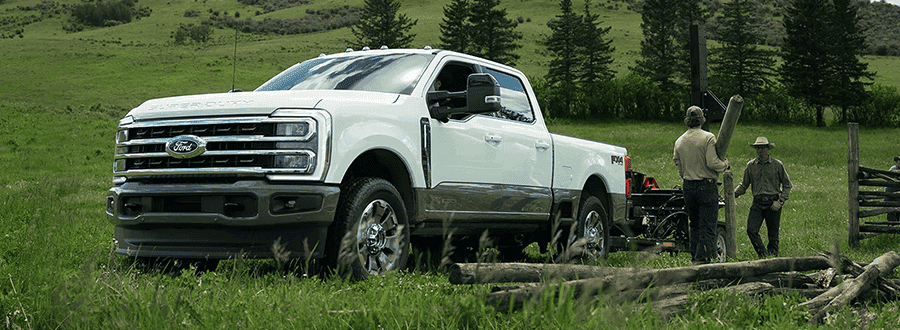
The decision between gas and diesel in a Ford Super Duty depends on towing frequency, payload weight, and overall annual mileage. Gasoline engines suit drivers who pull moderate loads under 20,000 pounds occasionally, run shorter daily commutes, and prioritize lower upfront purchase costs with simpler routine care. The Power Stroke turbo diesel is the right choice for heavy commercial hauling, frequent gooseneck trailering up to 40,000 pounds, and high-mileage highway driving where peak low-end torque transforms heavy load transport.
For the 2027 model year, Ford has simplified the Super Duty powertrain lineup around two heavy-duty engines. The naturally aspirated 7.3L V8 gas engine serves as the standard powerplant for F-250 and F-350 models, delivering a factory-rated 420 horsepower and 445 lb-ft of torque. For maximum capability, the 6.7L High-Output Power Stroke V8 turbo diesel delivers 500 horsepower and a massive 1,200 lb-ft of torque at 1,600 rpm. This High-Output diesel comes standard on F-450 models and remains available as an optional upgrade across F-250 and F-350 trims. Both engines pair directly with Ford’s proven 10-speed TorqShift automatic transmission.
Choosing the right truck for your needs starts with understanding how these powertrains perform in real-world driving environments. If your truck spends most of its time running errands, hauling bed cargo, or towing a boat on weekends, the gas V8 provides impressive capability without the premium sticker price or extra fluid requirements of a diesel. Drivers who pull heavy enclosed trailers, machinery, or large fifth-wheel RVs across long distances benefit instantly from the diesel’s relentless low-rpm pulling power.
At Essential Ford of Stuart, our vehicle specialists help truck buyers evaluate their trailering requirements to select the optimal powertrain. You can visit our Treasure Coast showroom location at 4000 Se Federal Hwy to compare Super Duty configurations in person, or give our sales team a quick call to discuss incoming allocations.
How Do Gas and Power Stroke Diesel Engines Compare in Towing and Fuel Economy for Treasure Coast Drivers?
The 6.7L High-Output Power Stroke V8 turbo diesel dominates heavy trailering with 1,200 lb-ft of torque that moves heavy loads effortlessly, while the 7.3L V8 gas engine delivers responsive acceleration and lower operating overhead for moderate towing. Real-world fuel economy for the diesel reaches around 20 mpg during light highway cruising, whereas the gas V8 averages roughly 13 to 17 mpg depending on load and driving conditions.
When pulling heavy trailers up steep ramps or against strong coastal winds, engine torque curves make a dramatic difference in vehicle dynamics. The diesel engine produces its peak 1,200 lb-ft of torque at just 1,600 rpm, allowing the 10-speed TorqShift automatic transmission to hold higher gears without constantly downshifting on highway inclines. This low-end grunt is essential for heavy commercial loads, enabling properly equipped F-450 models to handle a maximum towing capacity of 40,000 pounds.
By comparison, the standard 7.3L V8 gas engine delivers its 445 lb-ft of torque higher in the rev range at 4,250 rpm. While it requires the transmission to downshift under heavy strain, it provides smooth, linear power delivery that easily handles boat trailers, camper setups, and utility equipment. For local owners launching center-console boats at ramps around Stuart, the gas engine provides plenty of pulling power without requiring diesel exhaust fluid (DEF) refills or specialized fuel stops.
When truck shoppers test-drive Super Duty models on our lot, they often ask whether the diesel’s extra torque is necessary if they only tow heavy a few times per year. For buyers whose trailering involves seasonal weekend trips rather than daily commercial hauling, the 7.3L V8 gas engine saves thousands on purchase price while easily handling trailers under 15,000 pounds. If you are evaluating prior model years, you can also explore our inventory of pre-owned Ford trucks to compare late-model gas and diesel options side by side.
What Is the 5-to-10 Year Total Cost of Ownership Difference Between Super Duty Gas and Diesel?
Over a 5 to 10 year ownership horizon, gasoline Super Duty models deliver lower routine maintenance and repair costs, while Power Stroke diesel trucks offset their higher upkeep expenses through superior fuel efficiency on high-mileage routes and stronger overall resale value.
Understanding total cost of ownership requires looking beyond fuel pump prices to examine scheduled maintenance, fluid requirements, and powertrain warranty terms. The 7.3L V8 gas engine features a simple pushrod design with a cast-iron block, requiring standard V8 oil changes and basic air filter replacements. It runs on regular 87-octane unleaded gasoline and completely eliminates the need for diesel exhaust fluid, particulate filter regeneration, or fuel system water separators. Ford backs gas Super Duty powertrains with a standard 5 years / 60,000 miles powertrain warranty alongside 3 years / 36,000 miles bumper-to-bumper coverage.
The 6.7L High-Output Power Stroke V8 turbo diesel involves higher ongoing upkeep costs, including regular DEF replenishment, fuel filter replacements at strict intervals, and larger oil capacities. However, Ford extends warranty protection on diesel powertrains to 5 years / 100,000 miles, reflecting the engine’s commercial-grade durability. For high-mileage drivers traveling 20,000 miles or more per year, the diesel’s superior highway fuel economy helps narrow the operational cost gap over time.
Repair costs after the warranty period also favor the gas engine due to its simpler mechanical architecture. Diesel turbochargers, high-pressure fuel injection components, and emissions controls carry higher replacement costs if repairs are needed late in the vehicle’s lifespan. For buyers seeking long-term reliability with lower unexpected repair risks, checking out certified pre-owned Ford vehicles provides added warranty peace of mind on pre-owned Super Duty models.
How Do Purchase Pricing and 5-Year Resale Trends Impact Long-Term Value?
Gasoline Super Duty trucks offer a lower initial purchase price and retain approximately 55% to 58% of their value after five years, making them an excellent financial choice for budget-conscious buyers and daily commuters. Power Stroke diesel models command a significant upfront price premium but hold higher absolute dollar values on the used market, benefiting commercial operators who retain vehicles over long ownership cycles.
Upfront acquisition cost is the single largest financial distinction between gas and diesel Super Duty trucks. Upgrading to the 6.7L High-Output Power Stroke V8 turbo diesel adds a substantial option price to the window sticker compared to the standard 7.3L V8 gas engine. For buyers financing their purchase, this price difference can affect monthly payments and initial loan balances.
Resale trends on the secondary market show that diesel Super Duty models command strong buyer demand, particularly in dual-rear-wheel and heavy-towing configurations. However, because the gas V8 starts at a lower initial cost, its overall depreciation curve in dollar terms is often smaller than the diesel’s over the first five years. For instance, a small business owner hauling equipment across Palm City properties might find that a gas-powered Lariat trim offers maximum net equity retention because it avoids high initial financing costs while maintaining strong local trade-in value.
Evaluating long-term affordability requires balancing upfront expenditure against trade-in expectations. Before choosing your ideal engine, you can browse our new Ford vehicle inventory to view available truck configurations, value your trade-in online to establish current vehicle equity, and submit a Ford financing application to secure competitive loan terms.
Which Ford Super Duty Engine and Trim Selection Is Right for Your Workload?
Matching the right Super Duty engine and trim depends on balancing your daily comfort needs with required payload and towing capabilities. The 7.3L V8 gas engine is the standard match for XL, XLT, and Lariat trims on F-250 and F-350 models, while the 6.7L High-Output Power Stroke V8 turbo diesel comes standard on F-450 trims and is available across the upper lineup.
Ford structures the Super Duty lineup to cater to diverse commercial and personal requirements:
- XL: Designed as a pure work truck, featuring durable vinyl flooring, an 8.0-inch touchscreen, and the standard 7.3L V8 gas engine for job-site reliability.
- XLT: Upgrades to cloth seating and a 12.0-inch landscape touchscreen running Sync 4, offering a practical balance of utility and technology for daily work.
- Lariat: Represents a sweet spot for many buyers, adding ActiveX upholstered seating, heated and ventilated front seats, and available access to the Tremor off-road package.
- King Ranch: Features premium western-themed leather interiors, standard advanced trailer assistance technologies, and available Pro Power Onboard generator power.
- Platinum: Delivers refined executive styling with Multicontour front seats, Black Onyx interior accents, and high-tech driver assistance features.
- Platinum Plus: Replaces the former Limited trim as the luxury pinnacle, boasting Smoked Truffle perforated Venetian Leather, Max Recline front seats, and exclusive exterior accents.
Selecting between F-250, F-350, and F-450 series models further refines capability. Single-rear-wheel F-250 and F-350 trucks offer excellent ride quality for daily driving, while dual-rear-wheel F-350 and F-450 models provide the wide-track stability required for maximum payload and gooseneck trailering.
Frequently Asked Questions About Ford Super Duty Gas vs. Power Stroke Diesel
Q: Is the 7.3L V8 gas engine reliable for high-mileage commercial work?
Yes, the 7.3L V8 gas engine has established a strong reputation for durability thanks to its heavy-duty cast-iron block and overhead pushrod architecture. Fleet data indicates high-mileage longevity exceeding 250,000 miles when standard oil change intervals and routine inspection schedules are maintained.
Q: Does the 6.7L High-Output Power Stroke diesel require special maintenance?
The High-Output diesel requires regular replenishment of Diesel Exhaust Fluid (DEF), fuel filter replacements at specified intervals, and periodic water separator draining. Its water-cooled turbocharger and high-pressure fuel system demand strict adherence to maintenance guidelines to ensure long-term performance.
Q: What is the towing capacity difference between gas and diesel Super Duty trucks?
Gas-powered F-250 and F-350 models handle conventional towing setups up to approximately 18,500 pounds depending on axle ratio and configuration. The 6.7L High-Output Power Stroke V8 turbo diesel pushes towing limits up to 40,000 pounds on properly equipped F-450 gooseneck setups.
Q: How does ride quality compare between gas and diesel Super Duty models?
Gas Super Duty trucks feature a lighter front axle load, which results in slightly nimbler steering response and a smoother ride when driving unloaded. Diesel models carry extra weight over the front suspension, providing a grounded, stable feel that excels when pulling heavy trailers.
Q: Can I order the Tremor off-road package with both gas and diesel engines?
Yes, the Tremor off-road package can be paired with either the standard 7.3L V8 gas engine or the 6.7L High-Output Power Stroke V8 turbo diesel. The package includes a factory front lift, 35-inch off-road tires, a Dana front axle, and specialized suspension tuning.
Prices and MSRP referenced in this article are estimates for informational purposes only and do not constitute an offer to sell. See dealer for complete details.
Fuel economy estimates shown may differ from official EPA ratings and should not be relied upon as a guarantee of actual vehicle performance.

0 comment(s) so far on Ford Super Duty Gas vs Power Stroke Diesel: Which Engine Should You Choose?