

Ford Mustang Mach-E Range and Charging Guide: What EV Shoppers Should Know
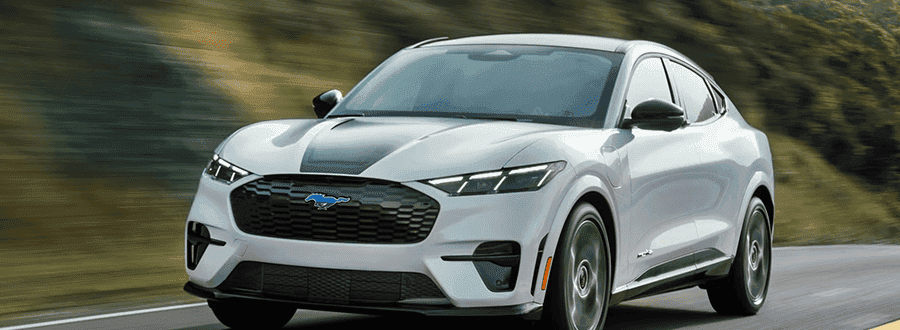
The 2026 Ford Mustang Mach-E delivers EPA-estimated driving ranges spanning from 230 miles on standard-range all-wheel-drive models up to 320 miles on extended-range rear-wheel-drive configurations. Beyond headline figures, city efficiency consistently outpaces highway mileage across the lineup. Standard-range rear-wheel-drive versions achieve 254 miles of city range and 245 miles on the highway (250 miles combined at 102 MPGe), whereas standard-range all-wheel-drive models earn 234 miles in the city and 225 miles on the highway (230 miles combined at 91 MPGe).
Understanding how these EPA estimates break down helps drivers match a powertrain to their exact driving habits. Electric vehicles operate with maximum energy efficiency during urban driving because stop-and-go traffic continuously feeds kinetic energy back into the battery through regenerative braking. High-speed highway driving requires continuous energy output to overcome aerodynamic drag, resulting in slightly lower range totals during extended interstate trips.
The Mustang Mach-E lineup offers several powertrain variations across the Select, Premium, GT, and Rally trims. Standard-range models utilize a 73 kWh usable battery capacity, delivering an economical entry point for daily driving. Extended-range models upgrade to usable battery capacities ranging from 88 kWh to 91 kWh, increasing total driving distance for drivers who frequently travel long distances.
For drivers evaluating how these range numbers translate to daily commutes along Federal Highway or coastal routes, our team at Essential Ford of Stuart is ready to walk you through real-world performance metrics. You can stop by our showroom address on South Federal Highway or give our specialists a quick call to discuss current model availability and charging setups.
How Long Does It Realistically Take to Recharge a Ford Mustang Mach-E at Home on a 240-Volt Level 2 Setup?
Replenishing a Ford Mustang Mach-E from near empty to a full charge on a 240-volt Level 2 home setup takes between 7 and 10 hours, depending on battery pack capacity and circuit amperage. Standard-range packs with 73 kWh usable capacity require approximately 7 hours on a dedicated 50-amp circuit, whereas extended-range battery packs with up to 91 kWh usable capacity require closer to 9 or 10 hours for a full overnight recovery.
The onboard AC charger inside the Mustang Mach-E caps power conversion at 10.5 kW. Because charging is classified as a continuous electrical load, National Electrical Code guidelines require breakers to be sized at 125% of the continuous current draw. Evaluating circuit options reveals how different home electrical installations perform:
- 40-Amp Circuit (32 Amps Continuous): Supplies 7.7 kW, recovering roughly 23 miles of range per hour and adding around 230 miles during a 10-hour overnight charge.
- 50-Amp Circuit (40 Amps Continuous): Supplies 9.6 kW, recovering roughly 29 miles of range per hour and adding around 290 miles during a 10-hour charge.
- 60-Amp Circuit (48 Amps Continuous): Supplies the car’s maximum 10.5 kW draw, recovering roughly 31 miles of range per hour and adding around 315 miles over 10 hours.
A 50-amp circuit utilizing a NEMA 14-50 industrial-grade receptacle delivers 91% of the car’s maximum charging acceptance rate. This setup often avoids expensive home electrical panel upgrades while providing complete overnight recovery. Whether you are returning home from an afternoon drive in Jensen Beach or preparing for a morning commute, plugging into a Level 2 outlet ensures your vehicle is fully replenished every morning.
If you are considering a pre-owned electric crossover or trading in a conventional gas vehicle, explore our pre-owned vehicle inventory to view available electric models and compare features.
What Are Realistic DC Fast-Charging Times for a Ford Mustang Mach-E from 10% to 80%?
Connecting a Ford Mustang Mach-E to a high-power DC fast-charging station replenishes the battery from a 10% to 80% state of charge in approximately 36 minutes under optimal operating temperatures. Peak charging speeds reach between 115 kW and 150 kW depending on whether the vehicle is equipped with a standard-range or extended-range battery pack.
Public fast-charging speed is governed by the vehicle’s thermal management system and charging curve. When plugged into a high-output Level 3 station, the vehicle accepts maximum power during the lower state-of-charge phase. As the battery reaches 80% capacity, the onboard management system deliberately slows the charging rate to manage cell temperature and preserve long-term battery health.
Key factors influencing public fast-charging performance include:
- Station Output: Utilizing stations rated at 150 kW or higher ensures the vehicle reaches its maximum intake ceiling.
- Battery Temperature: Active liquid heating and cooling pre-conditions the battery cells for optimal acceptance rates prior to plug-in.
- Connector Compatibility: Mustang Mach-E models feature standard Combined Charging System (CCS) ports and can utilize approved NACS adapters to access expanded public charger networks.
For shoppers looking for reconditioned electric options backed by factory standards, browsing certified pre-owned Ford vehicles provides additional confidence with thorough multi-point inspection coverage and warranty protections.
How Do Battery Sizes and Drivetrains Affect Mustang Mach-E Efficiency Across Palm City Commutes?
Selecting between single-motor rear-wheel drive and dual-motor all-wheel drive, alongside standard 73 kWh or extended 88-to-91 kWh battery options, directly determines total driving range and energy efficiency. Rear-wheel-drive configurations achieve the highest energy efficiency ratings, reaching up to 102 MPGe combined, while dual-motor eAWD models trade approximately 10 to 20 miles of total range for enhanced traction and instant torque delivery.
In daily driving conditions, the standard-range battery easily handles local driving schedules, school drop-offs, and trips to Palm City country clubs. The extended-range battery adds thermal capacity and additional kilowatt-hours, making it ideal for drivers who frequently embark on regional highway trips without wanting to stop for public charging.
First-time electric vehicle buyers comparing trims on our showroom floor often ask how much real-world range drops when opting for dual-motor all-wheel drive over single-motor rear-wheel drive. In practical terms, single-motor rear-wheel-drive models average around 33 kWh used per 100 miles, while dual-motor eAWD models consume roughly 37 kWh per 100 miles.
If you are planning to upgrade from your current vehicle to an all-electric SUV, our appraisal team can help you value your trade-in online to see how much equity you can apply toward your purchase.
What EV Shoppers Should Know About Home Charger Installation and Battery Maintenance
Establishing a proper home charging routine and following routine maintenance guidelines ensures long-term battery health and maximum vehicle reliability. Setting daily home charging limits to 80% or 90% for routine local driving minimizes cell stress, reserving 100% full charges for long-distance road trips. Leaving the vehicle plugged in during hot summer afternoons allows the active liquid cooling system to draw power directly from the grid rather than draining the internal battery.
Installing a home Level 2 charger requires an evaluation by a licensed electrician to verify panel capacity and wire gauge requirements. Heavy-duty industrial NEMA 14-50 outlets or dedicated hardwired chargers prevent thermal buildup at contact points over years of daily continuous draw. Beyond home charging infrastructure, electric ownership significantly simplifies routine vehicle maintenance:
- No Oil Changes: Eliminates engine oil, spark plug, and timing belt replacements entirely.
- Brake Longevity: Regenerative braking absorbs most slowing forces, dramatically extending brake pad and rotor lifespans.
- Routine Inspections: Tire rotations are recommended every 10,000 miles, along with cabin air filter replacements and fluid level checks.
The Mustang Mach-E features an active liquid thermal management system and a front trunk offering about 3 cubic feet of drainable storage space. Ford protects the electric powertrain with an 8-year/100,000-mile EV component warranty. Furthermore, J.D. Power’s 2026 U.S. Electric Vehicle Experience Ownership Study awarded the Mustang Mach-E 760 points, ranking it first among mass-market electric vehicles, while the Insurance Institute for Highway Safety designated it a 2026 Top Safety Pick.
To explore current model availability, view our selection of new Ford Mustang Mach-E SUVs. When your vehicle requires routine tire rotations or multi-point checks, you can quickly schedule a service appointment with our factory-trained technicians. Our team also makes securing competitive terms easy when you apply for Ford financing online.
Common Questions About Ford Mustang Mach-E Range and Charging Capabilities
Q: What size electrical breaker is best for home Level 2 charging?
A 50-amp circuit breaker paired with a 40-amp continuous-draw charger offers the ideal balance of speed and installation cost. It delivers 9.6 kW of power, which restores about 29 miles of range per hour and recharges an extended-range battery overnight while avoiding expensive service panel upgrades.
Q: Does ambient heat affect electric driving range?
Sustained high ambient temperatures require the vehicle’s automatic thermal management system to run liquid cooling pumps and cabin air conditioning continuously. While heat has a less severe impact on battery chemistry than freezing winter cold, running heavy climate control can reduce total efficiency by 5% to 15%. Pre-cooling the cabin while plugged into home power mitigates this range loss.
Q: Can I charge a Mustang Mach-E using a standard 120-volt household outlet?
Yes, the vehicle can charge using a standard 120-volt Level 1 outlet, which adds approximately 3 to 5 miles of range per hour. While Level 1 charging works as a temporary backup or for ultra-low daily mileage, installing a 240-volt Level 2 setup is strongly recommended for practical daily ownership.
Q: How does regenerative braking assist with driving range?
Regenerative braking converts kinetic energy back into electrical energy whenever the driver eases off the accelerator pedal or applies the brakes. This energy is fed directly back into the high-voltage battery pack, extending stop-and-go city range and reducing wear on friction brake components.
Q: What warranty covers the high-voltage battery pack?
Ford covers the high-voltage battery and electric powertrain components with an 8-year/100,000-mile warranty. This coverage guarantees against major manufacturing defects and excessive capacity loss, providing long-term peace of mind for new and pre-owned buyers.
Prices and MSRP referenced in this article are estimates for informational purposes only and do not constitute an offer to sell. See dealer for complete details.
Fuel economy estimates shown may differ from official EPA ratings and should not be relied upon as a guarantee of actual vehicle performance.

0 comment(s) so far on Ford Mustang Mach-E Range and Charging Guide: What EV Shoppers Should Know