

Ford Maverick vs Ranger: Which Ford Truck Is the Better Fit for You?
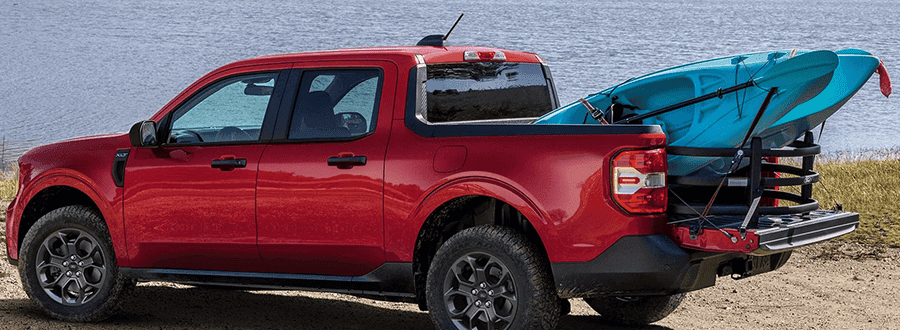
The 2026 Ford Maverick and 2026 Ford Ranger serve fundamentally different truck buyers: the Maverick is a compact unibody pickup built on a car-like platform designed for daily fuel efficiency, nimble urban maneuverability, and lighter hauling, while the Ranger is a midsize body-on-frame truck engineered for heavy-duty towing, higher payload capacity, and aggressive off-roading. Choosing between them comes down to whether your vehicle needs favor crossover-like ride comfort and lower operating costs or traditional truck frame strength and heavy trailering capability.
Built on an architectural foundation similar to a compact SUV, the Maverick offers an approachable entry into truck ownership without the parking challenges or stiff ride typical of traditional pickups. Expect options like an efficient 2.5-liter hybrid powertrain or a punchy 2.0-liter EcoBoost engine, delivering versatile performance for errands, home-improvement projects, and daily travel.
In contrast, the Ranger features a rugged ladder-frame chassis designed to tackle demanding work environments and deep trail driving. Powered by a standard turbocharged 2.3-liter EcoBoost engine or available EcoBoost V6 configurations, the Ranger provides substantial muscle for pulling heavy trailers, equipment, or camping rigs. Its elevated ground clearance and robust suspension setup cater to drivers who push their vehicles well past suburban pavement.
At Essential Ford of Stuart, our team helps you evaluate both platforms side by side so you can select the right configuration for your work and leisure needs. Whether you want to test drive the compact Maverick or explore the muscle of the midsize Ranger, you can drop by our Stuart showroom address or give our vehicle specialists (772) 287-0955 a call today.
What Are the Key Differences in Size, Interior Dimensions, and Towing Capacity?
The midsize Ford Ranger is approximately 10 inches longer and noticeably taller than the compact Ford Maverick, translating to a substantial leap in maximum towing capacity from the Maverick’s 4,000 pounds limit to the Ranger’s 7,500 pounds capability. This structural difference stems directly from chassis design: the Maverick uses unibody construction, whereas the Ranger relies on a boxed steel frame built for heavy stress.
The Maverick measures approximately 200 inches in overall length with a 121-inch wheelbase and a 4.5-foot bed. Inside the cabin, it provides surprisingly generous passenger space, including about 40 inches of front legroom and nearly 36 inches of rear legroom in its standard crew cab layout. Standard towing capacity for the Maverick starts at 2,000 pounds, which handles light utility trailers or small watercraft. When equipped with the turbocharged gas engine and the optional 4K Tow Package, max towing doubles to 4,000 pounds, while payload capacity reaches up to 1,500 pounds.
The Ranger measures longer overall with a standard 5-foot cargo bed, giving it an advantage when loading larger tools, lumber, or outdoor gear. The Ranger cab supplies nearly 44 inches of front legroom and roughly 35 inches in the rear row, providing extra front-seat stretch-out room and greater shoulder width throughout. Equipping the Ranger with the available Trailer Tow Package unlocks its maximum 7,500 pounds towing rating, allowing it to pull heavy center-console boats, horse trailers, or tandem-axle camper rigs with ease.
For drivers commuting along Port St. Lucie with a trailer or utility rig in tow, choosing the right frame structure ensures confident stability on highway runs and boat ramps alike. If you are comparing pre-owned truck options, take a look at our selection of quality pre-owned trucks to review available configurations, or start your buying journey by choosing to apply for Ford financing online.
What Engine Options, MPG Ratings, and Ride Quality Differences Can You Expect?
The 2026 Ford Maverick emphasizes daily fuel efficiency with an available 2.5-liter hybrid system returning up to an EPA-estimated 42 mpg city alongside smooth unibody handling, whereas the 2026 Ford Ranger relies on high-torque EcoBoost engines and a firm body-on-frame design built for heavy towing and off-road stability.
Powertrain offerings for the Maverick are anticipated to center on two main choices:
- A 2.5-liter hybrid paired with a continuously variable transmission delivering 191 hp combined, focused on maximum fuel savings.
- A 2.0-liter EcoBoost four-cylinder engine generating 238 hp and 277 lb-ft of torque, mated to an 8-speed automatic transmission for quick acceleration and higher towing limits.
- The street-performance Lobo trim pairs the 2.0-liter engine with a quick-shifting 7-speed automatic transmission and sport-tuned suspension.
The Ranger brings heavy-hitting powertrain options built around a standard 10-speed automatic transmission:
- A standard 2.3-liter EcoBoost four-cylinder producing 270 hp for balanced daily power and towing strength.
- An available 2.7-liter EcoBoost V6 delivering enhanced horsepower and muscular low-end torque.
- A high-output 3.0-liter EcoBoost V6 reserved for the specialized Raptor model.
Ride quality highlights the core engineering difference between the two trucks. The Maverick utilizes an independent front and rear suspension setup similar to a modern crossover. It absorbs bumps smoothly, stays flat through corners, and steers with lightweight precision. The Ranger uses a traditional truck rear axle with leaf or coil spring setups depending on trim, delivering a firmer, more athletic truck feel that settles down significantly when carrying cargo or towing a trailer.
Shoppers interested in factory-backed pre-owned trucks can explore our certified pre-owned Ford lineup, or contact our factory parts specialists to learn about available OEM performance accessories for either model.
How Do Off-Road Packages Compare Between the Maverick Tremor and Ranger FX4 or Raptor?
While the Maverick Tremor provides a tuned 1-inch suspension lift and twin-clutch rear drive unit designed for light to moderate trail exploration, the Ranger FX4 and high-performance Ranger Raptor deliver heavy-duty off-road capability with steel skid plates, electronic locking differentials, and long-travel suspension for challenging terrain.
The Maverick Tremor package elevates the compact truck’s capability for unpaved back roads and beach trails. It includes:
- A 1-inch factory suspension lift for increased ground clearance and improved approach angles.
- Heavy-duty transmission cooling and an upgraded suspension setup.
- An advanced twin-clutch rear drive unit capable of vectoring torque to individual rear wheels or locking the rear axle.
- Trail Control, which functions as low-speed off-road cruise control for steady throttle management on rough paths.
The Ranger FX4 Off-Road Package takes trail capability further with midsize truck toughness:
- Underbody steel skid plates protecting the steering rack, transfer case, and fuel tank.
- An electronic rear locking differential for maximum traction in mud, sand, or loose incline driving.
- Off-road tuned shocks and a dedicated Terrain Management System.
For extreme off-roading, the Ranger Raptor stands in a class of its own. Featuring long-travel suspension with Fox live-valve internal bypass shocks, front and rear electronic locking differentials, high-clearance bumpers, and a high-output 3.0-liter EcoBoost V6, it is engineered for high-speed desert running and technical rock crawling.
When truck shoppers walk our lot to compare off-road trims, they often ask whether the Maverick Tremor can handle sandy access roads or if they need the Ranger FX4’s locking rear differential. Our technicians inspect and service all trail-ready packages to manufacturer specifications; you can schedule a maintenance service appointment with our team anytime.
Which Truck Offers Better Interior Storage, DIY Utility, and Cabin Features?
Seasonal shoppers and daily drivers will find that the 2026 Ford Maverick leads in clever interior storage organization and customizable bed features with its FITS accessory slots and versatile FLEXBED, whereas the 2026 Ford Ranger provides a roomier, traditional cabin with deeper console storage and heavy-duty bed tie-downs.
Inside the Maverick cab, storage efficiency is maximized:
- FITS (Ford Integrated Tether System) slots located behind the center console and under the rear seats accept 3D-printed or factory accessories like extra cup holders, bag hooks, and storage bins.
- Large rear under-seat storage bins hold tools, sports gear, or emergency supplies completely out of view.
- Deep door pockets are specifically shaped to hold upright 1-liter water bottles.
- The 4.5-foot FLEXBED features pre-wired 12-volt 20-amp power leads, multi-position tailgate cables, and molded pocket slots designed to hold 2×4 lumber for custom two-tier cargo racks.
The Ranger focuses on heavy-duty cabin utility and passenger space:
- A oversized center console storage vault and dual glove boxes in upper trim levels.
- Fold-flat rear seat backs that create a wide, level interior cargo floor for tools and sensitive gear.
- An integrated rear bed step built directly into the rear bumper for easy cargo access.
- Available 120-volt household-style power outlets located in both the cabin and the truck bed.
Both models feature updated technology, including a standard 13.2-inch center touchscreen running Ford’s SYNC software with wireless Apple CarPlay and Android Auto integration, alongside driver-assist technology through the available Ford Co-Pilot360 safety suite.
Boating enthusiasts around Stuart who need to haul fishing gear and watersports equipment to local waterfront marinas often utilize the Maverick’s under-seat bins to keep damp gear secured out of sight. If you are thinking about upgrading your current vehicle, you can value your current trade-in online in just a few clicks.
Should You Buy a Ford Maverick or Ranger for Daily Commuting and Weekend Hauling?
The Ford Maverick excels in urban fuel efficiency and maneuverability, while the Ranger stands out with superior towing and off-road capabilities, making your choice dependent on specific lifestyle needs.
The Ford Maverick is the ideal choice if you:
- Prioritize high fuel economy, with city ratings reaching up to 42 mpg city on hybrid models.
- Drive primarily in suburban environments where easy parallel parking and garage clearance matter.
- Need a truck bed for DIY home projects, mulch, bicycles, and light equipment under 1,500 pounds.
- Tow lighter loads such as jet skis, small utility trailers, or light popup campers under 4,000 pounds.
The Ford Ranger is the ideal choice if you:
- Frequently pull heavy loads like center-console boats, campers, or equipment trailers weighing up to 7,500 pounds.
- Require maximum off-road capability with electronic locking differentials and heavy skid plates for rugged terrain.
- Prefer a traditional high-riding truck position with a firm, confident chassis feel.
- Need a 5-foot bed capable of carrying heavier payloads and bulkier cargo.
When you are ready to compare both models in person, get directions to our Stuart showroom or give our sales team a quick call at (772) 287-0955. You can also explore our new Ford Maverick inventory online to see what features best fit your budget.
Common Questions About the 2026 Ford Maverick and Ranger Lineup
Q: Can the Ford Maverick Hybrid tow a small trailer or boat?
The Maverick Hybrid offers a standard towing capacity of 2,000 pounds, which is well-suited for light utility trailers, personal watercraft, or small teardrop campers. For heavier towing requirements up to 4,000 pounds, buyers must select the 2.0-liter EcoBoost engine option equipped with the available 4K Tow Package.
Q: Does the Ford Ranger require different maintenance compared to the Maverick?
Both trucks follow Ford’s standard scheduled maintenance intervals, typically recommended every 10,000 miles for engine oil changes and tire rotations. However, because the Ranger features a traditional body-on-frame platform with available four-wheel drive, transfer case fluid changes and brake inspections may occur more frequently if you regularly tow heavy loads or travel off-road.
Q: How does rear passenger legroom compare between the Maverick and Ranger?
The compact Maverick offers approximately 36 inches of rear legroom in its standard crew cab layout, which is slightly more than the midsize Ranger’s 35 inches of rear legroom. However, the Ranger compensates with greater front legroom at nearly 44 inches and a wider cabin overall for extra shoulder room.
Q: What is the difference between Ford Trail Control and standard cruise control?
Trail Control operates as a low-speed cruise control system designed specifically for unpaved off-road driving. Available on trims like the Maverick Tremor and Ranger FX4, it automatically manages throttle and braking on steep or uneven inclines at speeds between 1 and 20 mph, allowing the driver to concentrate entirely on steering.
Q: Can I install custom dividers in the bed of the Ford Maverick?
Yes, the Maverick includes Ford’s FLEXBED design, which features molded pocket slots along the bed walls specifically sized to fit standard 2×4 and 2×6 lumber. This enables owners to build custom two-tier storage racks, cargo dividers, or bike mounts without making permanent modifications or drilling into the bed.
Prices and MSRP referenced in this article are estimates for informational purposes only and do not constitute an offer to sell. See dealer for complete details.
Fuel economy estimates shown may differ from official EPA ratings and should not be relied upon as a guarantee of actual vehicle performance.

0 comment(s) so far on Ford Maverick vs Ranger: Which Ford Truck Is the Better Fit for You?