

Ford F-250 vs F-350: Which Super Duty Truck Do You Actually Need?
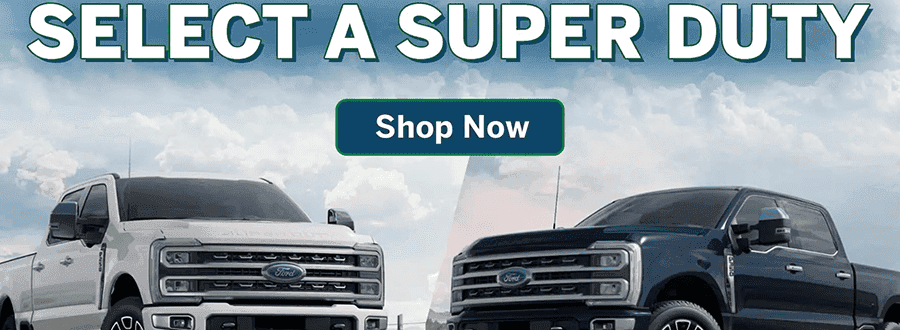
The primary difference between the 2026 Ford F-250 and F-350 lies in Gross Vehicle Weight Rating (GVWR), rear suspension spring rates, and ultimate hauling capability. While both heavy-duty Super Duty trucks share identical high-strength steel frames, cab configurations, and engine choices, the F-350 utilizes stiffer rear leaf spring bundles, taller rear blocks, and upgraded axle options. These structural enhancements allow the F-350 to offer a maximum payload capacity of up to 8,000 lbs compared to the F-250’s limit of 4,260 lbs.
Under the hood, both trucks utilize Ford’s robust powertrains and smooth-shifting 10-speed automatic transmission. The entry-level 6.8L V8 gas engine generates 405 horsepower and 445 lb-ft of torque, while the popular 7.3L V8 gas engine delivers 430 horsepower and 485 lb-ft of torque. For maximum towing output, the available 6.7L Power Stroke V8 turbo diesel pushes out 475 horsepower and 1,050 lb-ft of torque, with high-output variants reaching up to 1,200 lb-ft of torque. Independent testing of the 7.3L gas V8 shows 0–60 mph acceleration in the 7.0 to 7.5-second range, proving that these heavy-duty platforms deliver strong highway response alongside raw work capacity.
Choosing between these two Super Duty models comes down to how much weight you plan to place directly over the rear axle. For boat owners hauling heavy offshore vessels near waterfront marinas in Stuart, the F-250 easily handles substantial trailer weights while providing a slightly smoother unladen ride. However, when fifth-wheel camper pin weights or heavy commercial payloads enter the picture, the higher GVWR of the F-350 keeps your rig level and legal. To compare both trucks side-by-side, visit our Stuart showroom address or give our sales specialists a call at (772) 287-0955 today.
What is the price difference between a Ford F-250 and an F-350?
The 2026 Ford F-350 typically carries a slightly higher MSRP than the F-250 when matched trim for trim and engine for engine. Selecting a dual-rear-wheel (DRW) setup on the F-350 increases that initial price gap due to the additional axle width, extra wheels, and heavy-duty frame components, but it provides a massive jump in maximum payload and towing ratings.
Across the entire Super Duty lineup—ranging from the work-ready XL and XLT up to the luxurious Lariat, King Ranch, and Platinum trims—the price step from F-250 to F-350 remains surprisingly modest considering the capability upgrade. The factory build options and standalone packages are largely priced identically between both models. For example, adding the 6.7L Power Stroke V8 turbo diesel engine or the FX4 Off-Road Package costs the same whether you spec an F-250 or an F-350.
From an ownership economics perspective, that added investment in an F-350 often yields strong long-term value. Heavy-duty truck buyers in the pre-owned market actively seek out high GVWR ratings, meaning an F-350 frequently retains a higher percentage of its initial cost when it comes time to trade. If you want to evaluate recent model-year values across different configurations, exploring our pre-owned truck inventory gives clear insight into how heavy-duty Ford trucks hold their value over time.
What is the main difference in payload capacity between the Ford F-250 and F-350?
The primary difference in payload capability is that a properly equipped 2026 Ford F-250 tops out at approximately 4,260 lbs of bed capacity, whereas a single-rear-wheel F-350 reaches nearly 5,000 lbs and a dual-rear-wheel F-350 achieves an industry-leading 8,000 lbs maximum payload rating. This performance delta is engineered directly into the rear suspension geometry, axle shaft thickness, and Gross Vehicle Weight Rating (GVWR) thresholds.
Ford engineers equip the F-350 with a stiffer rear leaf spring stack, auxiliary overload springs, and taller rear lift blocks compared to the F-250. Additionally, the F-350 offers factory 14,000 lbs GVWR package options that raise the allowable combined weight of the vehicle and its cargo. When loaded with dense materials—such as masonry, gravel, or liquid totes—the stiffer suspension of the F-350 maintains proper ride height and headlight alignment, preventing rear-end sag.
Commercial operators and independent trade contractors hauling heavy tools and equipment to residential job sites in Port St. Lucie rely on this added payload margin. Exceeding a truck’s vehicle weight rating accelerates brake pad wear, stresses tires, and can lead to vehicle inspection citations. Choosing an F-350 ensures that even when carrying heavy equipment or utility bodies, your truck remains well within its engineered safety envelope. Drivers interested in previous model years with verified capability can inspect our certified pre-owned Ford selection to compare payload package stickers across different model years.
What is the maximum towing capacity of the Ford F-250 versus the F-350?
The 2026 Ford F-250 delivers a maximum conventional towing capacity of up to 22,000 lbs and gooseneck towing up to 23,000 lbs, while the F-350 elevates performance to 28,000 lbs conventional towing and up to 40,000 lbs gooseneck or fifth-wheel towing when properly configured with dual rear wheels and the 6.7L Power Stroke V8 turbo diesel.
To handle these extreme pulling demands safely, Ford offers the available Tow Technology Package, which integrates advanced driver-assist features into the 12-inch center display running SYNC 4. Key components include:
- Pro Trailer Backup Assist: Allows you to steer a trailer backward using a simple rotary knob on the dash while the system controls the steering wheel.
- Trailer Reverse Guidance: Utilizes multiple camera angles and dynamic guidelines to make backing into tight docks or trailer spaces effortless.
- 360-Degree Camera: Provides a top-down view around the perimeter of the truck and attached trailer to eliminate blind spots.
- BLIS with Trailer Coverage: Extends blind-spot monitoring down the entire length of your towed trailer.
- Smart Hitch: Measures tongue weight in real time to help you distribute trailer cargo evenly before hitting the highway.
Additionally, buyers opting for fifth-wheel or gooseneck applications can equip the factory 5th Wheel/Gooseneck Hitch Prep Package, which places under-bed crossmembers, mounting holes, and an integrated 7-pin wiring connector right inside the pickup box. When preparing to upgrade your towing setup, starting by evaluating your trade-in value online helps establish your purchasing power for a new Super Duty.
Does the Ford F-250 or F-350 offer a better ride quality for daily driving?
The 2026 Ford F-250 offers a noticeably softer and smoother ride quality for daily driving when unladen, as its lighter rear leaf spring rates and lower required tire pressures absorb sharp highway expansion joints and pavement chatter better than the F-350.
Because the F-350 is calibrated to support heavy vertical tongue weights and high payloads, its rear leaf spring pack is significantly stiffer. Driving an empty F-350 over unpaved roads or uneven pavement results in a firmer, bouncy ride. Conversely, the rear suspension of the F-250 compresses more willingly under minor road impacts, giving commuters and daily drivers a more compliant feel behind the wheel.
When local buyers walk our lot to compare heavy-duty trucks, our team usually points out the rear axle tire pressure sticker and leaf spring stack first, because those physical suspension components explain the entire capability gap between models. For drivers who use their truck primarily for personal transportation, light towing, and weekend errands, the F-250 strikes the ultimate balance between heavy-duty capability and daily comfort. Once you decide which suspension feel suits your lifestyle, submitting an online financing application gets the approval process started before your test drive.
What is a real example of the 2026 F-350’s payload capability in dealer inventory, and when does it become the better choice than an F-250?
A concrete example from dealer inventory is a 2026 Ford Super Duty F-350 DRW XL configured with the 14,000 lbs GVWR Payload Package, which delivers a maximum payload capacity of 6,706 lbs. Powered by the 6.7L Power Stroke V8 turbo diesel and fitted with a 4.10 or 3.55 Limited Slip Axle Ratio, this dual-rear-wheel workhorse is built specifically to carry immense vertical loads without compromising chassis stability.
The F-350 becomes the necessary choice over an F-250 in several distinct scenarios:
- Heavy Fifth-Wheel Towing: Large fifth-wheel recreational trailers often place 20% to 25% of their total trailer weight directly onto the truck bed as pin weight. A 16,000-lb trailer can easily exert 3,500 to 4,000 lbs of downward force, which instantly consumes an F-250’s payload capacity once passengers and gear are added.
- Slide-In Truck Campers: Hard-side slide-in campers concentrate their weight entirely inside the truck bed. The added lateral stability of the F-350 DRW’s wider rear track prevents excessive body roll.
- Commercial Utility Bodies: Upfitting a chassis with service crane beds, utility racks, or heavy liquid transfer tanks requires the 14,000 lbs GVWR foundation that only an F-350 or higher model line can legally provide.
If your trailering needs lean toward medium loads or lighter bumper-pull trailers, a less rigid truck or an option from our new Ford vehicle inventory may fit your daily driving routine better. However, when heavy pin weight is a factor, the F-350 is the definitive tool for the job.
Common Questions About Choosing Between a 2026 Ford F-250 and F-350
Q: What engines are available across the 2026 Ford Super Duty lineup?
Both the F-250 and F-350 offer four distinct engine options: the standard 6.8L V8 gas engine ( 405 horsepower, 445 lb-ft torque), the upgraded 7.3L V8 gas engine ( 430 horsepower, 485 lb-ft torque), the 6.7L Power Stroke V8 turbo diesel ( 475 horsepower, 1,050 lb-ft torque), and the High-Output 6.7L Power Stroke V8 turbo diesel producing 1,200 lb-ft of torque. All engines mate to a heavy-duty 10-speed automatic transmission.
Q: What is the main structural benefit of choosing a Dual Rear Wheel (DRW) F-350?
A dual-rear-wheel configuration places two extra tires on the rear axle, creating a wider track that spreads payload weight over a broader surface area. This significantly increases Gross Axle Weight Ratings, reduces lateral sway when towing tall enclosed trailers, and elevates maximum payload capacity to 8,000 lbs.
Q: Does an F-350 require a Commercial Driver’s License (CDL) to operate?
For personal use, operating an F-350 does not automatically require a CDL. However, if the combined Gross Vehicle Weight Rating (GCWR) of the truck and a commercial trailer exceeds 26,000 lbs, federal and state commercial regulations may apply. Always verify your specific combined weight ratings for commercial operations.
Q: How do factory warranty terms protect new 2026 Ford Super Duty trucks?
Every new Super Duty is covered by Ford’s standard 3-year/36,000-mile bumper-to-bumper limited warranty and a 5-year/60,000-mile powertrain limited warranty. Models equipped with the 6.7L Power Stroke V8 turbo diesel receive extended 5-year/100,000-mile powertrain coverage on the diesel engine.
Q: What safety and quality recognitions back the Ford Super Duty platform?
Ford’s Super Duty lineup was recognized for top performance in J.D. Power’s Initial Quality Study among heavy-duty pickup trucks. Furthermore, late-model Super Duty platforms carry a clean NHTSA safety-recall record, reflecting Ford’s commitment to vehicle build quality and long-term durability.
Prices and MSRP referenced in this article are estimates for informational purposes only and do not constitute an offer to sell. See dealer for complete details.
Fuel economy estimates shown may differ from official EPA ratings and should not be relied upon as a guarantee of actual vehicle performance.

0 comment(s) so far on Ford F-250 vs F-350: Which Super Duty Truck Do You Actually Need?