

Ford F-150 vs Ford Super Duty: Which Truck Do You Need for Towing in South Florida?
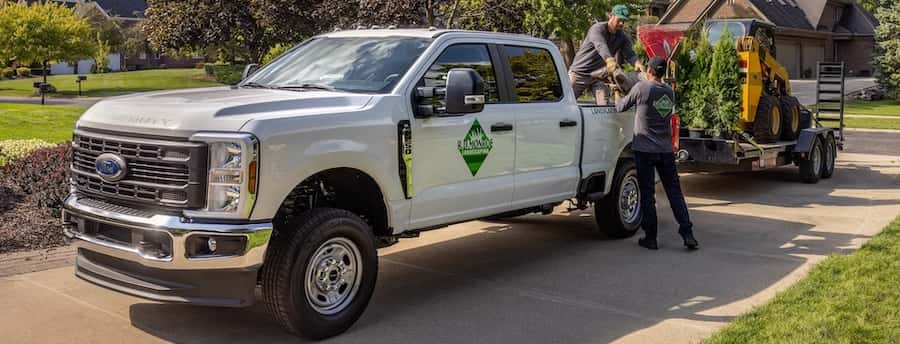
Boating and coastal recreation define the lifestyle along the Treasure Coast, where hauling heavy vessels to local launch ramps is a weekly ritual. Choosing between a light-duty pickup and a heavy-duty workhorse is the first decision for any local boater. A common question we hear on our showroom floor is whether a half-ton truck can safely handle a dual-axle boat trailer on a wet ramp or if a heavy-duty model is required. The answer depends on the weight of your vessel, the type of trailer you use, and how often you pull the load.
For those launching at the busy waterfront marinas in Stuart, having the correct trailering setup is essential to avoid slipping on algae-covered ramps. A light-duty truck offers excellent fuel economy and daily maneuverability, while a heavy-duty model provides the structural stability and low-end torque needed for massive offshore center consoles. Our team is always ready to assist you in finding the perfect match. You can get driving directions to our Stuart showroom to compare these trucks side by side, or simply give us a quick call to speak with a truck specialist today.
Maximum Towing Capacities: 2026 Ford F-150 vs 2026 Ford Super Duty
Understanding the gap between half-ton and heavy-duty towing limits is the key to choosing the right vehicle for your towing demands. The 2026 F-150 leads the half-ton segment with a maximum conventional towing capacity of up to 13,500 pounds when properly configured [1,2]. This maximum is achieved by equipping the truck with the twin-turbocharged 3.5L EcoBoost V6 engine, the Tow/Haul Package, and the Max Tow Axle upgrade [1].
When your towing requirements exceed those limits, the heavy-duty lineup steps in with significantly higher thresholds. The F-250 raises the bar, allowing you to tow up to 22,000 pounds conventionally and up to 23,000 pounds when using a gooseneck or fifth-wheel hitch. Moving up to the F-350 with a single-rear-wheel configuration allows for up to 23,000 pounds of conventional towing, while the dual-rear-wheel version of the F-350 elevates that capacity to 30,000 pounds conventionally and 38,000 pounds with a gooseneck setup. The F-450 dual-rear-wheel model represents the pinnacle of towing capability, rated to pull up to 30,000 pounds conventionally and an incredible 40,000 pounds with a gooseneck hitch.
Is a Properly Equipped F-150 Enough for Boat Trailers?
Matching a truck to a specific marine trailer requires looking closely at the total weight of your watercraft, fuel, gear, and the trailer itself. For most single-axle and dual-axle boat trailers, a properly equipped half-ton pickup is more than capable. A center console boat under 26 feet typically weighs between 5,000 pounds and 9,000 pounds fully loaded on a trailer, which sits comfortably within the towing limits of a properly configured F-150.
The sandier, low-lying coastal areas around Jensen Beach present unique traction challenges where a robust four-wheel-drive system and electronic locking differentials become highly valuable. Launching or retrieving a heavy boat in these estuarine environments requires a truck that can maintain grip on slick surfaces. While a light-duty truck handles these tasks with ease, stepping up to a heavy-duty model is the safer, more stable choice if you are pulling a triple-axle trailer carrying a large offshore boat that approaches or exceeds 13,000 pounds. The heavier curb weight, wider track, and beefier suspension of a heavy-duty truck prevent the trailer from dictating the movement of the vehicle, especially during sudden stops on wet coastal roads.
If you are ready to upgrade your towing setup, you can check out our current new Ford F-150 inventory to find a model equipped with advanced towing features. For buyers who prefer a smaller footprint for daily driving without the need for heavy trailering, we also offer a great selection of compact utility models, including our new Ford Bronco Sport inventory. Additionally, for those interested in cutting-edge electric performance, our new Ford Mustang Mach-E inventory showcases the latest in zero-emission technology.
How Payload and Hauling Capacities Differ Between F-150 and Super Duty
While pulling capacity gets the most attention, payload limits are often the actual deciding factor when choosing a truck for towing and hauling. Payload represents the total weight your truck can carry in the cab and bed, including the tongue weight of your trailer. The F-150 offers a maximum available payload capacity of 2,440 pounds when properly configured, which typically requires a Regular Cab setup with the 3.5L EcoBoost V6 engine [5,11].
The heavy-duty lineup offers a massive step up in carrying capacity, making it the preferred choice for commercial operators and those hauling heavy materials. The F-250 supports a maximum payload of up to 4,200 pounds, while the single-rear-wheel F-350 can carry up to 5,300 pounds. For the ultimate in hauling capability, the dual-rear-wheel gas-powered F-350 can support up to 8,000 pounds of payload, which is the highest rating in the non-commercial lineup. This extra capacity is crucial for fifth-wheel and gooseneck trailers, which place a significantly higher percentage of their weight directly over the rear axle of the truck.
If you do not require the extreme payload capacities of a heavy-duty truck, a light-duty or mid-size pickup is often a more practical and efficient choice for daily chores. You can check out our versatile new Ford Maverick inventory for a highly efficient compact truck, or browse our new Ford Bronco inventory if you prefer an off-road-ready SUV with excellent utility. We also encourage you to browse used inventory on our lot to find late-model trucks that offer outstanding payload and towing capabilities at a great value.
Comparing Ford Powertrains: EcoBoost, PowerBoost Hybrid, and Power Stroke Diesel
The choice of motor dictates not only how much weight you can pull but also how the truck performs under load. The F-150 offers a diverse engine lineup, starting with the highly efficient 2.7L EcoBoost V6 which produces 325 horsepower and 400 lb-ft of torque, delivering a maximum towing capacity of 8,400 pounds [3,8]. Stepping up to the twin-turbocharged 3.5L EcoBoost V6 unlocks 400 horsepower and 500 lb-ft of torque, which is the specific engine required to reach the maximum half-ton towing capacity of 13,500 pounds [1,3].
For drivers seeking a balance of efficiency and high-output performance, the 3.5L PowerBoost Full Hybrid V6 is an outstanding option. This hybrid powertrain generates 420 horsepower and 570 lb-ft of torque, allowing you to tow up to 11,600 pounds while enjoying the added benefit of the available 7.2 kW Pro Power Onboard system [3,8]. This system turns your truck bed into a mobile generator, which is highly useful for powering electronics during outdoor adventures or backing up essential home appliances during summer storm outages. In contrast, the heavy-duty lineup relies on massive power plants like the 6.7L Power Stroke turbo diesel, which delivers up to 1,200 lb-ft of torque for effortless heavy-duty towing over long distances.
Common Questions About Towing with Ford Trucks
Q: Does the F-150 or Super Duty require a fifth-wheel hitch for maximum towing?
The F-150 achieves its maximum towing capacity of 13,500 pounds using a conventional bumper-pull receiver with a weight-distributing hitch [1,2]. In contrast, the Super Duty lineup requires a fifth-wheel or gooseneck hitch to unlock its absolute maximum capacities, which range from 23,000 pounds on the F-250 up to 40,000 pounds on the F-450.
Q: How does the hot South Florida climate affect towing performance?
Sustained high ambient temperatures during hot summers place extra stress on a truck’s cooling system and transmission. Both the F-150 and Super Duty feature advanced thermal management systems to keep engine and transmission fluids within safe limits, but choosing a model with an auxiliary cooler is highly recommended for frequent heavy hauling. To explore highly efficient options with advanced cooling tech, you can browse our selection of new Ford Hybrids and EVs.
Q: What towing-assist technologies are available to help with hitching?
Ford offers advanced driver-assist features like Pro Trailer Hitch Assist, which automatically steers, accelerates, and brakes the truck to align the hitch ball with the trailer coupler. Additionally, the 360-degree camera system provides a bird’s-eye view of your surroundings, making tight maneuvers at boat ramps or campsites much easier. If you want to learn about our dealership and our commitment to helping you find a truck with these advanced systems, our team is ready to assist.
Q: Is there a mid-size SUV that offers respectable towing capacity for smaller boats?
Yes, if you do not need the footprint of a full-size truck, certain crossover models offer excellent utility for light towing. For example, you can check out our new Ford Edge inventory to find a versatile mid-size SUV capable of towing up to 3,500 pounds when properly equipped, which is perfect for jet skis or small utility trailers.

0 comment(s) so far on Ford F-150 vs Ford Super Duty: Which Truck Do You Need for Towing in South Florida?