

Ford Expedition vs Expedition MAX: How Much Extra Space Do You Get?
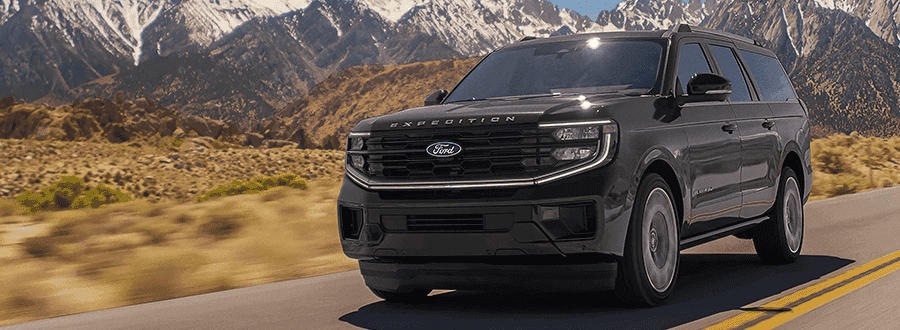
The 2026 Ford Expedition MAX extends 11.8 inches longer overall than the standard Expedition, expanding total wheelbase by 9 inches to deliver nearly 15 additional cubic feet of cargo volume behind every seat row. While interior width, seating capacity for up to eight passengers, and third-row legroom remain virtually identical between both body styles, the MAX configuration dedicates its extra footprint entirely to rear cargo capacity and floor length.
Choosing between the standard wheelbase and the MAX extended wheelbase comes down to how you balance daily maneuverability against maximum gear storage. The standard Expedition offers generous three-row seating with ample cargo space for routine family errands, easily fitting into standard residential garages. For families in Stuart who regularly haul bulky equipment, water sports gear, or luggage for weekend trips along the St. Lucie River, the added rear overhang of the MAX transforms the vehicle into an ultimate cargo hauler.
Both configurations utilize the powerful 3.5L EcoBoost V6 engine paired with a 10-speed automatic transmission, ensuring responsive acceleration whether navigating local traffic or towing heavy loads. Deciding on the right size requires looking at your specific cargo demands, garage dimensions, and parking preferences. You can view our showroom location on Federal Highway or give our team a quick call to discuss which body length best fits your lifestyle.
What Are the Exterior Length and Wheelbase Differences Between Both Models?
The 2026 Ford Expedition’s standard model spans just under 210 inches, while the MAX version extends over 221 inches, highlighting their key size difference. This architectural difference adds 11.8 inches to total bumper-to-bumper length and 9 inches to the distance between the front and rear wheels.
Because the extra dimensions are concentrated from the rear doors back, the vehicle’s width and overall height remain unchanged. The longer 131.5-inch wheelbase of the MAX contributes to exceptional highway tracking and straight-line stability, making long-distance cruising remarkably serene. However, the extended body does result in a wider turning radius, which requires slightly more attention when navigating tight parking structures or narrow drive-thrus.
Garage compatibility is another key factor when evaluating exterior size. Standard home garages typically measure between 20 and 22 feet in depth. While a standard Expedition at roughly 17.5 feet long fits comfortably in most residential bays with room to walk around, the MAX stretches to nearly 18.5 feet, making precise measurements of your garage space a smart preliminary step. Drivers interested in comparing physical footprints can explore our selection of new Ford Expedition models or examine our pre-owned lineup by taking time to browse pre-owned vehicle inventory.
Does the Ford Expedition MAX Offer More Third-Row Passenger Legroom?
No, the 2026 Ford Expedition MAX does not increase passenger legroom in the third row, as passenger cabin dimensions are identical across both body lengths. Both the standard Expedition and the MAX offer the same spacious third-row seating, providing up to 36 inches of legroom that comfortably accommodates adults and growing teenagers alike.
When local families examine both SUVs on our lot, they often assume the longer body adds legroom inside, but walking around to the back quickly reveals that every added inch sits behind the third row. Second-row passenger legroom is similarly generous in both versions, measuring 41.1 inches in standard positioning and expanding to 42.2 inches when sliding the seats rearward. The standard tilt-and-slide second-row seats function smoothly even with child safety seats installed via lower anchors, allowing easy access to the back row in either configuration.
Because passenger comfort levels are identical in all three rows, your decision between the standard length and MAX comes down entirely to cargo utility rather than passenger accommodations. Those considering a high-value pre-owned full-size SUV can shop certified pre-owned Ford inventory to find multi-row models equipped with premium cabin features.
How Much Additional Cargo Space and Floor Length Do You Get with the MAX?
The 2026 Ford Expedition MAX provides about 37 cubic feet of cargo space behind the third row, delivering an extra about 14.5 cubic feet of storage compared to the standard Expedition’s about 23 cubic feet. This expanded rear cargo bay represents a greater than 60 percent increase in usable volume when all seven or eight seats are in use.
The cargo advantages of the MAX configuration extend across every seating layout:
- Behind the Third Row: The MAX provides about 37 cubic feet compared to about 23 cubic feet in the standard model, adding about 14.5 cubic feet of dedicated rear storage.
- Behind the Second Row: Folding the third-row seats yields about 84.5 cubic feet in the MAX versus about 70 cubic feet in the standard version, a gain of about 15 cubic feet.
- Behind the First Row: With all rear seats folded flat, maximum cargo volume reaches about 123 cubic feet in the MAX compared to about 108.5 cubic feet in the standard Expedition, providing about 15 cubic feet of total additional capacity.
Beyond total volume, floor length increases significantly in the MAX model. The distance from the rear liftgate to the back of the front seats reaches over 102 inches in the MAX, allowing full eight-foot structural materials, kayaks, or large sports equipment to lie flat with the tailgate fully closed. For suburban families in Palm City packing bags, sports gear, and folding chairs for weekend tournaments, that extra floor length means loading full luggage sets upright behind the third row without obscuring rearward visibility.
Maintaining your vehicle’s cargo management systems, power-folding seat motors, and power liftgate components is essential for long-term convenience. Owners can easily book a service appointment online to keep every utility feature operating smoothly.
How Much More Does the Ford Expedition MAX Cost Compared to the Standard Expedition?
Upgrading to the 2026 Ford Expedition MAX adds a price premium of approximately $3,000 over an equivalently trimmed standard-wheelbase Expedition. This cost increase remains relatively consistent across trim levels, including Active, King Ranch, Tremor, and Platinum editions.
For that additional investment, buyers gain nearly 15 extra cubic feet of overall cargo space, a longer cargo floor, and enhanced utility features such as the split rear tailgate setup. However, potential buyers should also evaluate slight tradeoffs in towing specifications. When equipped with the available Heavy-Duty Trailer Tow Package in 4×4 configuration, the standard Expedition achieves a maximum tow rating of up to 9,600 lbs, while the heavier frame and extended body of the Expedition MAX yield a maximum tow rating of 9,000 lbs (or 6,300 lbs in 4×2 trim).
Evaluating long-term value involves weighing the $3,000 initial package price against your daily hauling requirements and garage space constraints. To help offset the upgrade cost when acquiring a full-size SUV, prospective buyers can value your trade-in online to receive an estimated market valuation for your current vehicle.
Common Questions About the Ford Expedition vs Expedition MAX Space and Specs
Does the Expedition MAX fit in a standard home garage?
At Essential Ford of Stuart, customers can explore the full lineup of 2026 Ford Expeditions, including the spacious MAX variant. While standard residential double garages typically range from 20 to 22 feet in depth, built-in shelving, workbenches, or hot water heaters can reduce available clearance. We recommend measuring your garage depth from the closed door to any wall obstructions before selecting the MAX body length.
Is the engine power different between the Expedition and Expedition MAX?
Engine performance is identical across both body lengths for matching trim levels. Both standard and MAX configurations feature the 3.5L EcoBoost V6 producing 400 horsepower and 480 lb-ft of torque as standard equipment. Higher trims or those optioned with the Platinum Ultimate Package or Stealth Performance Package feature the High-Output 3.5L EcoBoost V6 generating 440 hp and 510 lb-ft of torque.
How does fuel economy compare between standard and MAX models?
Fuel economy ratings remain very close between the two sizes, with the MAX carrying a minor penalty due to its additional curb weight. Standard 4×2 models earn an EPA-estimated 17 mpg city / 23 mpg highway, while 4×4 variants generally deliver 16 mpg city / 22 mpg highway. Highway cruising range in the MAX remains impressive thanks to its generous fuel tank capacity.
Does the split rear tailgate come standard on the Expedition MAX?
Yes, the innovative split rear tailgate design is integrated into the 2026 Expedition lineup. This setup features a top glass section that lifts upward alongside a lower tailgate section that drops down like a pickup truck bed, supporting up to 500 pounds for seating or cargo staging. You can learn about our dealership philosophy to see how our team demonstrates these practical features during your visit.
What tow rating does the 2026 Expedition MAX offer for pulling boats or trailers?
When properly equipped with 4WD and the available Heavy-Duty Trailer Tow Package, the 2026 Ford Expedition MAX offers a maximum towing capacity of up to 9,000 lbs. The standard-wheelbase 4×4 version offers up to 9,600 lbs. Both models feature advanced towing technology such as Pro Trailer Backup Assist and integrated trailer brake controllers. Shoppers preparing for their next vehicle purchase can apply for Ford financing online to streamline their showroom visit.
Prices and MSRP referenced in this article are estimates for informational purposes only and do not constitute an offer to sell. See dealer for complete details.
Fuel economy estimates shown may differ from official EPA ratings and should not be relied upon as a guarantee of actual vehicle performance.

0 comment(s) so far on Ford Expedition vs Expedition MAX: How Much Extra Space Do You Get?