

Ford 4WD Transfer Case and Differential Service: What Truck Owners Should Know
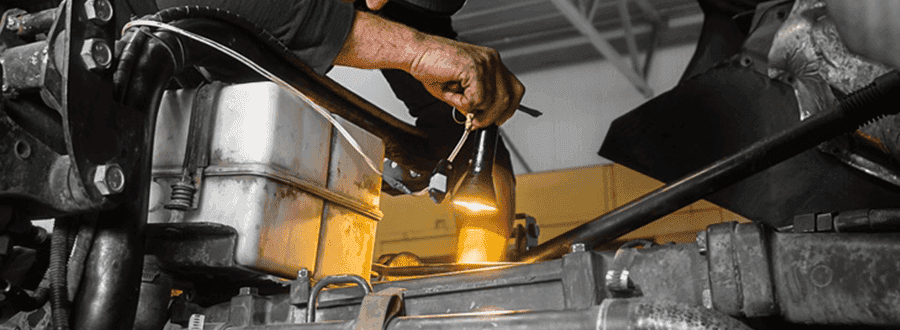
Ford generally recommends replacing 4WD transfer case and differential fluids every 30,000 to 60,000 miles under severe operating conditions such as frequent towing, off-roading, or boat launching, or up to 150,000 miles under normal, light-duty highway driving per factory maintenance guidelines. Because maintenance intervals depend heavily on vehicle model year, engine output, axle size, and operating environment, owners should always verify specific fluid change schedules against their official owner’s manual documentation.
Four-wheel-drive trucks like the 2026 Ford F-150 and 2026 Ford Super Duty rely on clean, un-degraded lubricants to protect internal gears, bearings, and drive chains under load. Over time, thermal friction and fluid oxidation break down protective chemical additives, while microscopic metal shavings from gear meshing accumulate inside the fluid housings. Drivetrain components operating with worn fluid experience accelerated wear, elevated running temperatures, and reduced engagement smoothness.
Our service advisors frequently observe that truck owners who regularly back boat trailers into coastal waters around Stuart remember to service their rear axle but overlook the transfer case. Submerging warm axle housings or transfer cases in water creates a thermal vacuum that can pull moisture past seals into fluid cavities. When water mixes with gear oil or transfer case fluid, it destroys lubricity and creates a milky sludge that rapidly corrodes internal steel components.
To maintain four-wheel-drive reliability and protect factory powertrain warranty coverage, routine drivetrain inspections should accompany every oil change. Draining and refilling transfer cases and front and rear axles at designated intervals prevents costly mechanical failures and keeps torque transfer smooth. For personalized fluid interval recommendations, owners can easily find our service center location or give our team a call at (772) 287-0955 to speak directly with a certified Ford technician.
What Is the Difference Between Ford Transfer Case Service and Differential Service?
Transfer case service replaces specialized hydraulic fluid in the central gearbox that manages power distribution between the front and rear drive shafts, whereas differential service changes heavy gear oil in the front or rear axle housings that splits rotational torque between the left and right wheels.
Ford 4WD DRIVETRAIN SERVICE COMPARISON
| FEATURE | TRANSFER CASE SERVICE | DIFFERENTIAL SERVICE |
|---|---|---|
| Primary Function | Splits torque front-to-rear | Splits torque left-to-right |
| Component Location | Behind transmission | Mounted on front/rear axles |
| Internal Components | Drive chains, clutch packs, gears | Hypoid ring & pinion gears |
| Fluid Type | Low-viscosity transfer case fluid | High-viscosity gear oil |
| Typical Capacity | About 1.5 to 2 quarts | About 1.5 to 3 quarts |
The transfer case mounts directly behind the transmission. Inside, a heavy-duty drive chain, planetary gear sets, and electronic shift actuators engage two-wheel drive, four-wheel drive high, or four-wheel drive low. On trucks equipped with an automatic 4A four-wheel-drive setting, the transfer case also houses wet clutch packs that continuously slip and engage to modulate power to the front axle based on wheel traction. Service requires draining the old fluid, clearing drain plug magnets of metallic debris, and refilling the unit with fluid formulated for internal friction plates.
Differential service focuses on the axle gearboxes located at the center of the front and rear drive axles. Differentials use hypoid bevel gears to turn rotational drive-shaft motion 90 degrees out to the axle shafts. Because left and right tires travel at different speeds during cornering, the differential allows independent wheel speeds. In trucks with limited-slip differentials, specialized clutch packs or mechanical lockers prevent a slipping tire from stealing all engine torque. Servicing the differential involves evacuating old gear oil, cleaning the magnetic drain or inspection cover, inspecting gear teeth for pitting or excessive wear pattern marks, and refilling the housing with high-viscosity gear oil.
Truck owners can easily schedule your drivetrain service online to ensure both systems receive complete inspection and fresh fluid. If you plan to complete maintenance yourself, you can contact our parts department to source genuine original-equipment lubricants specifically engineered for your truck’s driveline configuration.
What Lubrication Fluids and Viscosity Specs Do Ford Drivetrains Require?
Ford 4WD transfer cases require lightweight automatic transmission or specialized transfer case fluids such as Motorcraft MERCON LV or Motorcraft Transfer Case Fluid, while front differentials specify Motorcraft SAE 75W-85 API GL-5 gear oil and rear differentials use SAE 75W-85 or heavy-duty SAE 75W-140 synthetic gear oil depending on axle size and trailering package options.
Using the correct fluid formulation in each component is vital because transfer cases and differentials operate under entirely different physical mechanical dynamics. Transfer cases contain high-speed drive chains and delicate clutch friction materials that require low viscosity and specific anti-shudder friction characteristics. Installing thick gear oil in a transfer case starves internal oil passages, causes clutch chatter, and prevents proper electric shift actuator movement. Most modern Ford transfer cases hold approximately 1.5 to 2 quarts of fluid during a fluid replacement.
Differentials subject fluid to extreme mechanical pressure where hypoid gear teeth mesh together under high torque load. Front axles generally use SAE 75W-85 gear oil with API GL-5 extreme-pressure ratings to balance cold-weather flow with high-load protection. Rear axles on light-duty trucks like the 2026 Ford F-150 utilize SAE 75W-85 for fuel efficiency, while heavy-duty payload packages or 2026 Ford Super Duty trucks require SAE 75W-140 synthetic gear lubricant to withstand intense shear forces and elevated operating temperatures. Rear differentials fitted with mechanical limited-slip clutch packs also require a dedicated friction modifier additive to eliminate chatter during low-speed turns.
| Drivetrain Component | Specified Fluid Type | Typical Fluid Viscosity | Key Protection Feature |
|---|---|---|---|
| Transfer Case | Motorcraft MERCON LV / Transfer Case Fluid | Low Viscosity | Anti-shudder, clutch protection |
| Front Differential | Motorcraft SAE 75W-85 | 75W-85 API GL-5 | Hypoid gear wear resistance |
| Rear Differential (Standard) | Motorcraft Synthetic Gear Oil | SAE 75W-85 | Thermal stability & efficiency |
| Rear Differential (Heavy Duty) | Motorcraft Synthetic Gear Oil | SAE 75W-140 | High-load thermal protection |
What Happens If You Service Differentials But Neglect the Transfer Case?
Servicing axle differentials while neglecting the transfer case causes severe fluid degradation inside the central gearbox, leading to drive chain stretch, clutch pack slippage in 4A auto modes, bearing wear, and eventual catastrophic four-wheel-drive mechanical failure.
Because transfer cases are hidden behind skid plates beneath the middle of the truck, they are frequently overlooked during routine maintenance. However, the transfer case processes 100 percent of engine torque before sending power out to the axles. As transfer case fluid ages, heat and mechanical agitation cause it to lose film strength and viscosity. Without proper lubrication, the internal drive chain stretches over time, creating a loose link fit that causes rattling noises and slipping gear teeth under heavy acceleration in four-wheel drive.
On modern Ford trucks featuring automatic 4A torque-on-demand settings, degraded fluid compromises wet clutch performance. The internal clutch packs rely on clean fluid to transfer power smoothly to the front differential when rear wheel slipping is detected. Dirty or burnt fluid causes clutch disc glaze, delayed engagement, harsh binding sensations during tight turns, and total failure of the automatic four-wheel-drive system.
Overheated transfer case bearings can eventually lock up entirely. A seized transfer case can crack its aluminum casing, damage the transmission output shaft, and strand the vehicle on or off the road. Replacing a ruined transfer case costs significantly more than routine fluid maintenance, proving why total drivetrain care is necessary for long-term truck durability.
How Do Severe Driving Conditions and Heavy Towing Impact Ford Service Schedules?
Heavy towing, frequent trailering, extended high-speed driving in summer heat, off-roading, and water submersion shorten recommended transfer case and differential fluid service intervals from 150,000 miles down to every 30,000 to 50,000 miles.
Truck owners towing trailers in warm climate corridors like Palm City subject rear axle differentials and transfer cases to extreme heat buildup. Pulling heavy loads generates intense friction between hypoid gear teeth, pushing rear axle oil temperatures beyond normal operating limits. Under sustained thermal stress, conventional gear oils thin out and oxidize, leaving gears vulnerable to metal-to-metal contact, scuffing, and premature bearing fatigue.
Full synthetic gear oils, such as SAE 75W-140 synthetic gear lubricant, provide exceptional thermal stability and shear resistance for heavy towing applications. Synthetics retain thick protective lubricating films at high temperatures, resist varnish buildup, and reduce gear drag to maximize mechanical power transfer. Synthetic gear oils resist thermal breakdown far better than conventional fluids, protecting vital driveline components during heavy payload hauling.
Severe-duty maintenance protocols apply whenever a truck experiences any of the following operational conditions:
- Regular trailer towing or camper hauling over long distances.
- Driving through deep water, muddy terrain, or launching watercraft at boat ramps.
- Frequent low-speed idling, stop-and-go driving, or commercial job site work.
- Operating regularly in ambient summer heat above 90 degrees Fahrenheit.
Regularly inspecting fluid condition through drain plugs or sight ports allows technicians to detect dark, burnt-smelling oil or water contamination early, preserving the driveline for years of dependable service.
Common Questions About Ford 4WD Drivetrain Care
Q: What is the average cost to service both front and rear differentials on a Ford F-150?
Servicing both front and rear differentials on a Ford F-150 typically ranges from $300 to $550 total. This cost covers draining old gear lubricant, inspecting housing covers and internal magnets for wear particles, cleaning housing seals, and refilling both gearboxes with fresh synthetic gear oil. Exact service pricing depends on axle size, required fluid capacity, and whether specialized friction modifiers are needed for limited-slip differentials.
Q: Do transfer cases and differentials use the same type of lubrication fluid?
No, transfer cases and differentials require different fluid formulations specifically engineered for their internal mechanical designs. Modern Ford transfer cases use low-viscosity automatic transmission or transfer case fluids like Motorcraft MERCON LV to protect drive chains and wet clutch packs. Differentials use high-viscosity hypoid gear oils like SAE 75W-85 or SAE 75W-140 to cushion heavy gear mesh under high torque loads.
Q: How do synthetic gear oils benefit Ford trucks used for heavy towing?
Synthetic gear lubricants provide superior thermal resistance, shear stability, and film strength under extreme towing loads. When hauling heavy trailers, differential gears generate high friction and heat. Synthetic gear oils maintain proper viscosity at elevated temperatures, reduce friction losses, prevent internal component scoring, and significantly extend bearing life compared to conventional fluids.
Q: What schedule determines transfer-case and differential service intervals for a 2027 Ford truck?
Drivetrain service schedules for a 2027 Ford truck are dictated by the factory maintenance guidelines in the official owner’s manual, tailored to the vehicle’s powertrain, axle ratio, and driving conditions. Ford divides service needs into normal and severe-duty schedules. Trucks subjected to towing, off-roading, or frequent idling require reduced service intervals compared to light-duty highway commuters.
Q: How should Ford truck owners verify whether towing or severe use changes transfer-case and differential service needs?
Truck owners can review the severe-duty operating conditions section in their owner’s manual or speak with factory-trained technicians. Operating in extreme ambient heat, hauling near maximum payload limits, or launching boats at water ramps qualifies a vehicle for severe-duty maintenance. Drivetrain specialists evaluate vehicle usage and fluid clarity to determine the ideal service schedule for long-term component protection. Truck owners can learn about our certified service department to see how factory-trained technicians care for complex four-wheel-drive systems.
Prices and MSRP referenced in this article are estimates for informational purposes only and do not constitute an offer to sell. See dealer for complete details.
Fuel economy estimates shown may differ from official EPA ratings and should not be relied upon as a guarantee of actual vehicle performance.

0 comment(s) so far on Ford 4WD Transfer Case and Differential Service: What Truck Owners Should Know