

2026 Ford F-150 King Ranch vs 2026 Toyota Tundra
The 2026 Ford F-150 King Ranch and 2026 Toyota Tundra 1794 Edition combine premium comfort with full-size pickup capability. The F-150 King Ranch stands out with its standard 400-horsepower 3.5L EcoBoost V6, 500 lb-ft of torque, spacious SuperCrew cabin, and advanced available trailering technology. The Tundra 1794 Edition counters with a 389-horsepower twin-turbo V6, upscale Western-inspired interior, and strong towing capability. For drivers around Stuart and Palm City, both offer refined transportation and practical utility, but Ford provides advantages in passenger space, available payload, and truck-focused convenience features.
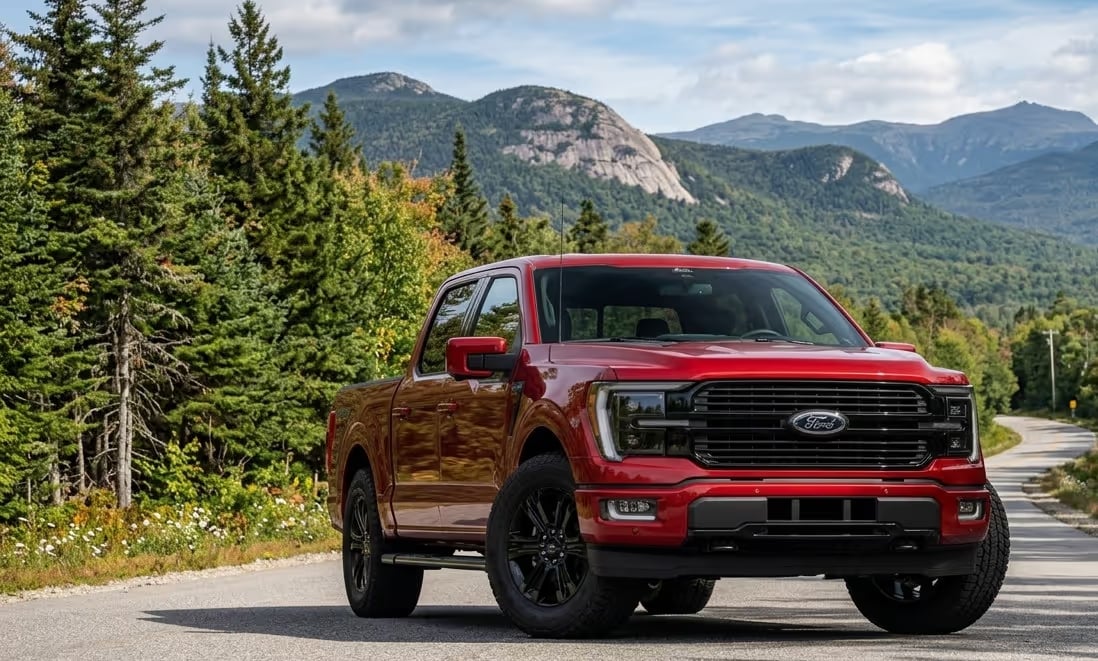
Which 2026 Truck Is the Better Fit: Ford F-150 or Toyota Tundra?
The 2026 Ford F-150 King Ranch makes a strong case for drivers who want premium comfort without sacrificing hauling capability. Compared with the Toyota Tundra 1794 Edition, the gasoline-powered King Ranch offers greater standard engine horsepower and torque, more front and rear legroom, and a broader selection of work-oriented technologies.
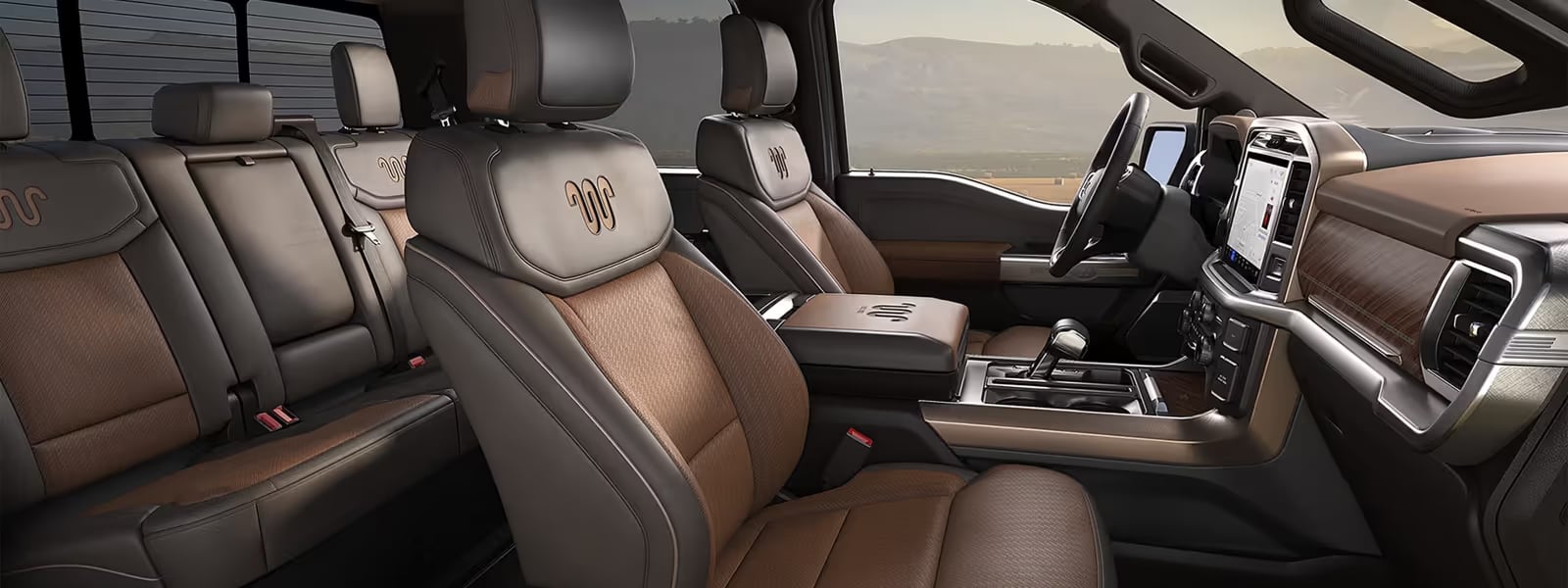
Both trucks feature upscale interiors inspired by Western styling, with leather-appointed seating, distinctive trim materials, and modern digital displays. Their full-size crew cabs make them practical for families as well as drivers who regularly carry passengers between jobsites, marinas, and weekend destinations.
The Ford’s 3.5L EcoBoost V6 delivers 400 horsepower and 500 lb-ft of torque, compared with the Tundra’s 389 horsepower and 479 lb-ft from its 3.4L twin-turbo V6. Ford also offers an available PowerBoost full-hybrid powertrain for buyers seeking additional torque and onboard electrical power.
The Tundra brings its own advantages, including a strong reputation for truck capability, a distinctive 1794 Edition cabin, and an IIHS TOP SAFETY PICK award for the 2026 Crew Cab. Certain Tundra 1794 Edition configurations also offer higher maximum towing ratings than the specific F-150 King Ranch setups compared here.
For Stuart-area buyers prioritizing interior room, versatile bed configurations, and towing assistance, the F-150 King Ranch deserves particular consideration. Shoppers weighing different price points can also browse used vehicle inventory at Essential Ford of Stuart.
Which Truck Offers Better Trim Value?
The 2026 Ford F-150 King Ranch SuperCrew starts at a referenced $65,825 MSRP with rear-wheel drive and a 5.5-foot bed. The comparable 2026 Toyota Tundra 1794 Edition CrewMax starts at $64,380 MSRP with rear-wheel drive and a 5.5-foot bed. The Toyota begins $1,445 lower before destination, but the Ford offers additional standard and available features that may justify the difference for some shoppers.
Ford offers the King Ranch with rear-wheel drive or four-wheel drive, along with 5.5-foot and 6.5-foot bed choices on eligible configurations. Toyota also offers the Tundra 1794 Edition with multiple drivetrain and bed configurations.
The King Ranch emphasizes upscale craftsmanship with distinctive leather seating, wood-inspired trim, a premium B&O sound system, and convenient exterior equipment. Features such as power-deployable running boards and a power tailgate can simplify daily use. Certain equipment, including upgraded sound systems and specialized comfort features, depends on the selected equipment group or options.
The Tundra 1794 Edition includes its own premium leather seating, 20-inch wheels, distinctive exterior details, and advanced technology. Available power running boards, bed steps, and towing-related equipment can add convenience but may increase the vehicle’s final price.
When comparing these trucks, buyers should examine individual window stickers rather than relying exclusively on base MSRP. Equipment packages, wheel choices, drivetrain, bed length, and dealer-installed accessories can change the final price substantially.
To prepare for your next truck purchase, value your trade-in online. Buyers looking for bed covers, towing accessories, or cargo protection can also contact the Essential Ford parts department for compatible Ford accessories.
2026 Ford F-150 King Ranch vs. Toyota Tundra 1794 Edition Pricing
| Ford F-150 King Ranch | Base MSRP | Toyota Tundra 1794 Edition | Base MSRP |
|---|---|---|---|
| RWD SuperCrew, 5.5-ft bed | $65,825 | RWD CrewMax, 5.5-ft bed | $64,380 |
| 4×4 SuperCrew, 5.5-ft bed | $69,625 | 4WD CrewMax, 5.5-ft bed | $67,380 |
| 4×4 SuperCrew, 6.5-ft bed | $69,930 | 4WD CrewMax, 6.5-ft bed | $67,710 |
The figures above are reference base MSRPs for specified configurations, before destination and delivery, optional equipment, taxes, registration, and dealer fees. The original comparison lists Ford destination at approximately $2,795 and Toyota destination at approximately $2,195. Confirm current charges on each vehicle’s window sticker, as they may vary by vehicle and production timing.
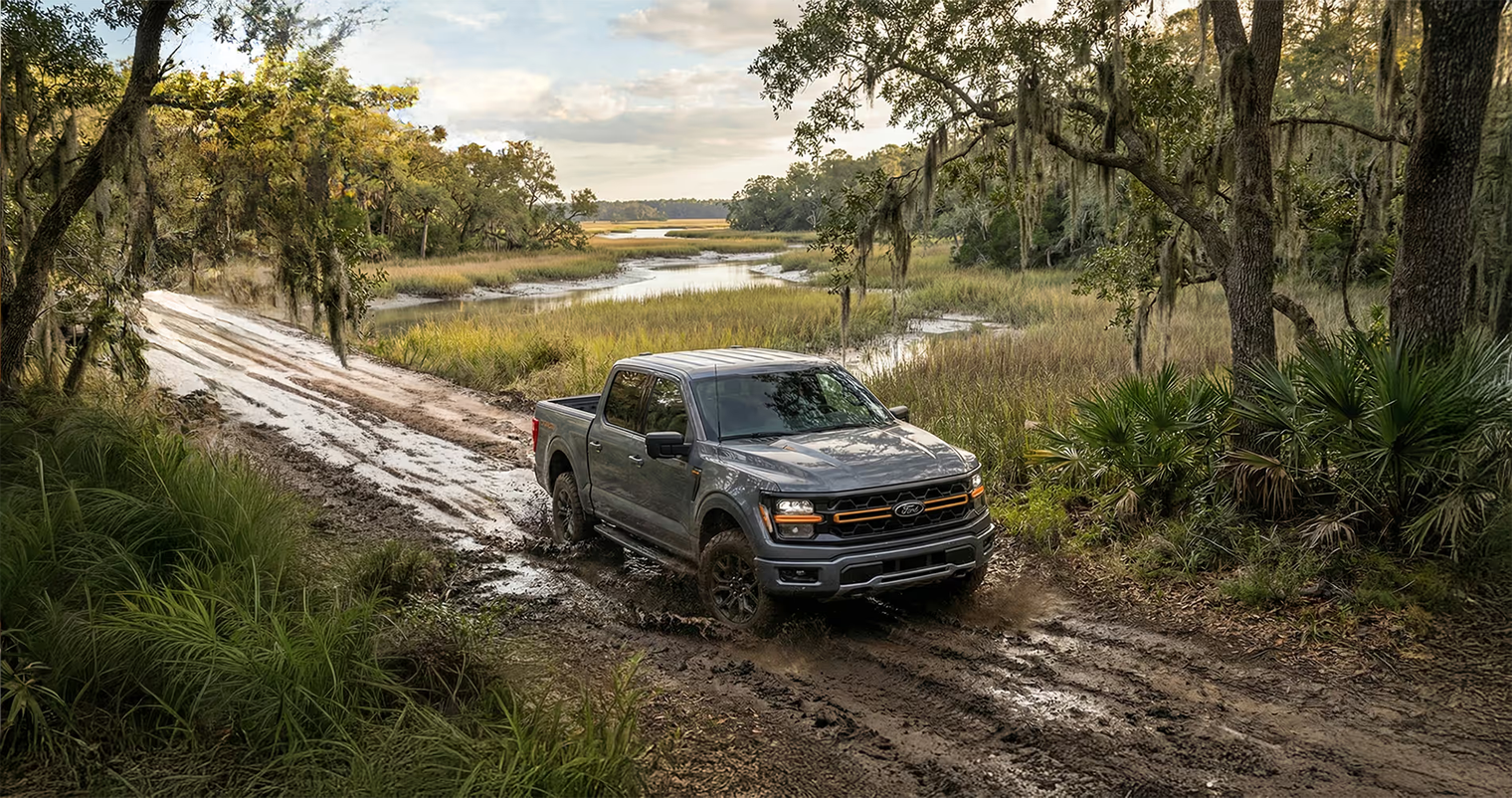
Which Truck Has the Space Families Need for Passengers and Gear?
The 2026 Ford F-150 King Ranch SuperCrew provides more passenger legroom than the comparable 2026 Toyota Tundra 1794 Edition CrewMax. With approximately 43.9 inches of front legroom and 43.6 inches of rear legroom, the Ford gives taller passengers additional room to stretch out. The Toyota offers approximately 41.2 inches of front legroom and 41.6 inches of rear legroom.
Both premium pickup configurations seat five passengers, with front bucket seats and a rear bench. The F-150 also offers approximately 40.8 inches of front headroom and 40.4 inches in the rear, compared with roughly 39.3 inches up front and 36.9 inches in the rear for the Tundra.
The Ford’s additional shoulder room also supports passenger comfort. The F-150 measures approximately 66.7 inches across the front seats and 66 inches across the rear, compared with approximately 65 and 62.4 inches in the Toyota. Families regularly transporting multiple passengers or child seats may appreciate the Ford’s wider cabin.
Truck-bed dimensions matter just as much as passenger comfort. The F-150 King Ranch’s 5.5-foot box provides approximately 52.8 cubic feet of cargo volume, while the longer 6.5-foot box offers approximately 62.3 cubic feet. The shorter bed has an interior floor length of approximately 67.1 inches, increasing to 78.9 inches on the longer version.
The Ford bed measures approximately 50.6 inches between the wheelhouses, allowing a standard four-foot-wide sheet of plywood to lie flat between them. The Toyota’s corresponding width is approximately 48.7 inches, also sufficient for a four-foot-wide sheet, although with less clearance.
For Stuart and Palm City drivers transporting landscaping supplies, fishing equipment, tools, or home improvement materials, both trucks offer considerable utility. The Ford’s additional bed length and width can provide more flexibility depending on the selected configuration.
Payload is another important factor. In the King Ranch configurations referenced by the original comparison, Ford lists approximately 1,945 to 2,000 lbs of payload capacity, while the Toyota 1794 Edition configurations are listed at approximately 1,575 to 1,720 lbs. Actual ratings depend on engine, drivetrain, bed length, and equipment.
The vehicle-specific payload rating is essential when carrying passengers and cargo or towing a trailer, because trailer tongue weight counts toward the truck’s available payload. Always consult the driver’s-door certification label rather than relying solely on a general model rating.
Passenger Space, Towing & Payload
| Specification | F-150 King Ranch | Tundra 1794 Edition |
|---|---|---|
| Seating | 5 | 5 |
| Front legroom | 43.9 in | 41.2 in |
| Rear legroom | 43.6 in | 41.6 in |
| Referenced payload | Approx. 1,945–2,000 lbs | Approx. 1,575–1,720 lbs |
| Referenced towing, selected configurations | Up to 10,800 lbs | Up to 11,500 lbs |
| 5.5-ft bed length | Approx. 67.1 in | Approx. 65.6 in |
Towing and payload figures are selected-configuration references, not universal ratings for all King Ranch or 1794 Edition trucks. Available weight capacity changes with equipment, drivetrain, cab, bed, engine, passengers, and accessories. Ford’s full F-150 lineup has higher available maximum tow ratings than the particular King Ranch models shown here.
Which Truck Feels Better to Drive and Uses Less Fuel?
The 2026 Ford F-150 King Ranch delivers stronger standard engine output than the gasoline 2026 Toyota Tundra 1794 Edition. Ford’s 3.5L EcoBoost V6 produces 400 horsepower and 500 lb-ft of torque, compared with 389 horsepower and 479 lb-ft from Toyota’s 3.4L twin-turbo V6.
Both trucks use ten-speed automatic transmissions, helping balance highway cruising and towing performance. Ford’s EcoBoost V6 delivers substantial low-end torque, while Toyota’s twin-turbo engine provides responsive acceleration suitable for everyday driving and hauling.
The F-150 King Ranch also offers an available 3.5L PowerBoost Full Hybrid V6. For 2026, Ford lists approximately 430 horsepower and 578 lb-ft of torque for this hybrid powertrain. Buyers can equip compatible trucks with Pro Power Onboard, including an available 7.2-kW system that supplies electricity for supported tools, appliances, and recreational equipment.
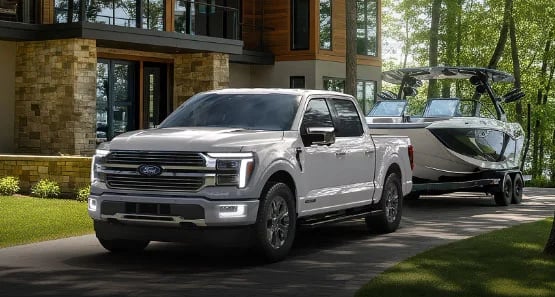
For drivers who regularly tow a boat, camper, or work trailer, both trucks offer useful capability. The original comparison lists the F-150 King Ranch at up to approximately 10,400 lbs with certain 5.5-foot-bed configurations and 10,800 lbs with certain longer-bed configurations. The Tundra 1794 Edition reaches approximately 11,500 lbs in select rear-wheel-drive setups.
These numbers demonstrate why maximum towing should be evaluated by exact configuration. Although the F-150 family can tow up to 13,500 lbs with the appropriate engine and equipment, that maximum does not apply to every King Ranch. Likewise, the highest Tundra 1794 Edition rating does not apply to every drivetrain or bed configuration.
Ford offers useful trailer assistance technology, including available Pro Trailer Backup Assist, Pro Trailer Hitch Assist, an integrated trailer brake controller, and trailer-related blind spot monitoring. Features and standard equipment vary by package.
Fuel economy between the gasoline V6 models is closely matched. The Ford King Ranch rear-wheel-drive configuration earns an EPA-estimated 17 city / 25 highway / 20 combined MPG. The 4×4 configuration earns 17 city / 23 highway / 19 combined MPG.
The gasoline Toyota Tundra 1794 Edition earns approximately 18 city / 23 highway / 20 combined MPG with rear-wheel drive and 17 city / 22 highway / 19 combined MPG with four-wheel drive. In other words, the trucks are closely matched in combined efficiency, with Ford holding a slight highway advantage in these configurations.
Fuel tank size also affects driving range. The F-150 King Ranch’s referenced 36-gallon tank is larger than the Tundra’s approximately 32.2-gallon tank. This can allow longer stretches between fuel stops, although real-world range varies substantially with towing, load, speed, weather, and driving habits.
2026 F-150 and Tundra Fuel Economy
| Gasoline Configuration | EPA City / Highway / Combined |
|---|---|
| Ford F-150 King Ranch RWD | 17 / 25 / 20 MPG |
| Ford F-150 King Ranch 4×4 | 17 / 23 / 19 MPG |
| Toyota Tundra 1794 Edition RWD | 18 / 23 / 20 MPG |
| Toyota Tundra 1794 Edition 4WD | 17 / 22 / 19 MPG |
EPA estimates apply to specified gasoline V6 configurations and may vary with selected equipment or powertrain. The Ford PowerBoost hybrid and Toyota i-FORCE MAX hybrid have their own ratings. Actual MPG and range depend on real-world operating conditions.
Which Truck Makes Everyday Technology Easier to Use?
Both the 2026 Ford F-150 King Ranch and 2026 Toyota Tundra 1794 Edition offer sophisticated infotainment and connected vehicle technology. Ford emphasizes a balanced combination of digital displays, familiar controls, and available work-related equipment, while Toyota offers a larger central touchscreen.
The F-150 King Ranch features a 12-inch digital instrument cluster and a 12-inch center touchscreen running Ford’s SYNC 4 system. Wireless Apple CarPlay and Android Auto compatibility allow drivers to access supported smartphone navigation, calls, and music without a cable.
The Tundra 1794 Edition features a 14-inch multimedia touchscreen with wireless smartphone compatibility and available premium audio. Its interface provides access to navigation, vehicle information, and connected services.
Ford’s available BlueCruise technology offers hands-free highway driving assistance on compatible prequalified highways when conditions permit. The system monitors driver attention and is not autonomous. Availability, activation, and continued use may require a connected-service plan.
The Ford truck also offers features such as a head-up display, available 360-degree camera technology, and premium B&O audio. Equipment can vary by the chosen King Ranch package and production configuration.
Connected Ford services may include remote start, vehicle status, location functions, and an available Wi-Fi hotspot through the Ford app. Certain features require compatible network service or paid plans.
One Ford advantage for buyers who regularly use electrical tools or spend time camping is the available Pro Power Onboard system. On appropriately equipped PowerBoost hybrid trucks, its available 7.2-kW output can help power compatible electrical devices without a separate portable generator.
Toyota also provides useful towing technology, including available trailer backup guidance, cameras, and connected vehicle functions. Drivers should compare the actual feature packages on individual trucks, rather than assuming every technology is standard on either model.
Engine & Performance Overview
| Specification | Ford F-150 King Ranch | Toyota Tundra 1794 Edition |
|---|---|---|
| Gasoline engine | 3.5L EcoBoost twin-turbo V6 | 3.4L i-FORCE twin-turbo V6 |
| Horsepower | 400 hp | 389 hp |
| Torque | 500 lb-ft | 479 lb-ft |
| Transmission | 10-speed automatic | 10-speed automatic |
| Drivetrain | RWD or 4×4 | RWD or 4WD |
| Available hybrid | 3.5L PowerBoost Full Hybrid | 3.4L i-FORCE MAX Hybrid |
Which Truck’s Safety Features Better Support Family Driving?
The 2026 Ford F-150 King Ranch and 2026 Toyota Tundra 1794 Edition offer comprehensive occupant protection and active driver-assistance features. However, their safety awards and testing results should be described accurately rather than assuming both trucks received the same recognition.
The 2026 Toyota Tundra Crew Cab earned an IIHS TOP SAFETY PICK award, while the gasoline Ford F-150 did not appear among the Institute’s 2026 TOP SAFETY PICK recipients. This is an important distinction for safety-conscious buyers. The absence of an award does not mean the Ford lacks substantial safety equipment, but the two models should not be credited with the same IIHS designation.
Ford equips the F-150 King Ranch with advanced driver-assistance technologies, including Pre-Collision Assist with Automatic Emergency Braking, BLIS with Cross-Traffic Alert, and available trailer blind-spot coverage. These systems can help the driver recognize hazards while maneuvering or traveling on the highway.
The King Ranch also offers a 360-degree camera, parking sensors, and available trailer-related camera and guidance features. These technologies can be especially useful when connecting a trailer or backing a large pickup into a tight space.
Toyota provides Toyota Safety Sense 2.5 on the Tundra, with features including Pre-Collision System with Pedestrian Detection, Lane Departure Alert, Lane Tracing Assist, and Dynamic Radar Cruise Control. Available parking and camera technology provides additional support for low-speed maneuvers.
The Tundra 1794 Edition includes a comprehensive airbag system, while Ford provides front, side-impact, and curtain airbag protection. Differences in airbag count should not be treated as a direct measurement of overall occupant safety.
NHTSA star ratings vary with body style, drivetrain, and tested configuration. Buyers should review the current federal rating for their specific vehicle rather than assuming every version receives identical frontal, side, rollover, or overall ratings.
Driver-assistance systems have operating limits, and neither truck can prevent every collision. Features such as lane assistance, automatic braking, and trailer monitoring require attentive drivers who remain responsible for vehicle operation.
What Do Warranty, Maintenance, and Coastal Ownership Look Like for Stuart Buyers?
The 2026 Ford F-150 includes a three-year/36,000-mile new-vehicle limited warranty and a five-year/60,000-mile powertrain limited warranty, whichever comes first. Ford also provides eligible roadside assistance during the applicable coverage period.
The 2026 Toyota Tundra provides a similar three-year/36,000-mile basic warranty and five-year/60,000-mile powertrain warranty. Toyota’s roadside assistance program is generally included for two years, while its ToyotaCare program includes qualifying factory-scheduled maintenance for two years or 25,000 miles.
Ford’s longer roadside assistance period may appeal to drivers who frequently take road trips or tow recreational equipment. However, Toyota’s included scheduled maintenance offers a separate ownership benefit. Buyers should compare both programs and review the manufacturer’s exclusions and limitations.
For Stuart-area owners who regularly travel near saltwater or tow boats, proper vehicle cleaning and corrosion prevention are especially important. Both manufacturers offer corrosion-perforation warranty coverage, but these warranties do not cover every type of surface corrosion or salt-related deterioration.
The Ford F-150’s available PowerBoost hybrid powertrain includes separate protection for qualifying hybrid components. Ford’s hybrid-related coverage generally extends up to eight years or 100,000 miles, subject to the applicable warranty booklet.
Ford owners seeking manufacturer roadside assistance can contact 1-800-241-3673. Eligibility, towing arrangements, assistance limits, and covered services depend on the vehicle and program terms.
Essential Ford of Stuart supports drivers with routine maintenance, diagnostics, and genuine replacement parts. Buyers can browse new F-150 inventory or compare available certified pre-owned Ford vehicles.
Current owners can schedule a service appointment for routine maintenance or inspections, including checks of tires, brakes, underbody components, and trailer-related equipment.
Frequently Asked Questions: 2026 Ford F-150 vs. Toyota Tundra
Is the 2026 Ford F-150 King Ranch worth more than the Toyota Tundra 1794 Edition?
The F-150 King Ranch starts at a slightly higher base MSRP but offers more standard gasoline-engine horsepower and torque, additional passenger legroom, and useful available trailering features. The Tundra 1794 Edition starts lower and has its own premium interior and safety advantages. The better value depends on the equipment and capabilities you need.
Which truck has the longer driving range?
The referenced Ford F-150 King Ranch has a 36-gallon fuel tank, compared with approximately 32.2 gallons for the Tundra 1794 Edition. Because their combined MPG ratings are similar in equivalent gasoline configurations, the Ford generally provides more potential driving range between fill-ups. Actual range depends on towing, payload, driving style, and road conditions.
Which truck can tow more?
Among the specific premium gasoline trims compared, certain Toyota Tundra 1794 Edition configurations are rated to tow up to approximately 11,500 lbs, compared with up to approximately 10,800 lbs for selected F-150 King Ranch configurations. Ford’s broader F-150 lineup has a higher available maximum towing rating of up to 13,500 lbs when properly equipped.
Which pickup provides more passenger room?
The F-150 King Ranch SuperCrew offers approximately 43.9 inches of front legroom and 43.6 inches of rear legroom. The Tundra 1794 Edition CrewMax provides approximately 41.2 inches up front and 41.6 inches in the rear. Ford also offers greater headroom and shoulder room in the referenced configurations.
Which truck earned the 2026 IIHS TOP SAFETY PICK award?
The 2026 Toyota Tundra Crew Cab earned an IIHS TOP SAFETY PICK award. The gasoline-powered 2026 Ford F-150 did not receive that award. Both trucks provide extensive safety equipment, and shoppers should review the specific crash-test ratings and vehicle configurations.
Does the 2026 Ford F-150 King Ranch offer a hybrid engine?
Yes. The King Ranch offers an available 3.5L PowerBoost Full Hybrid V6. This powertrain provides approximately 430 horsepower and 578 lb-ft of torque, along with available Pro Power Onboard electrical capability.
Does the Ford F-150 provide better payload capacity?
Several King Ranch configurations have higher referenced payload capacity than the comparable Tundra 1794 Edition models, but the precise difference depends on drivetrain, bed length, powertrain, and installed options. Confirm the actual payload rating on the driver’s-door label before loading or towing.
Where can I test drive a 2026 Ford F-150 near Stuart, FL?
Visit Essential Ford of Stuart at 4000 SE Federal Hwy, Stuart, FL 34997. Call (772) 287-0955 to confirm available F-150 King Ranch configurations or arrange a test drive. You can also apply for financing online before your visit.
Explore the 2026 Ford F-150 King Ranch at Essential Ford of Stuart
The 2026 Ford F-150 King Ranch combines premium cabin materials, impressive passenger room, a powerful EcoBoost V6, and useful available towing technology. Its multiple drivetrain and bed configurations make it a practical option for drivers balancing everyday comfort with work, recreation, and family responsibilities.
The Toyota Tundra 1794 Edition remains a worthy competitor, offering upscale equipment, strong towing potential in certain configurations, and an IIHS TOP SAFETY PICK award. Both trucks deserve consideration, but buyers seeking Ford’s expansive SuperCrew cabin, available PowerBoost hybrid, and specialized trailer-assistance features may prefer the F-150.
Visit Essential Ford of Stuart to compare available King Ranch configurations, review specific towing and payload ratings, and explore a truck that fits your needs.
Pricing: Manufacturer’s Suggested Retail Prices are reference starting prices for specified models and do not constitute final dealership selling prices or binding offers. Prices exclude applicable destination and delivery fees, dealer fees, taxes, title, registration, optional equipment, and accessories. Manufacturer pricing, incentives, availability, and vehicle configurations may change without notice. Verify individual vehicle pricing and equipment with the selling dealership.
Performance, Towing, and Payload: Horsepower, torque, payload, towing ratings, curb weight, bed measurements, and related specifications apply only to designated configurations. Capacity varies by engine, drivetrain, bed length, cab, axle ratio, towing equipment, passengers, accessories, and installed options. Maximum model-line towing ratings do not apply universally to the King Ranch or 1794 Edition. Refer to manufacturer towing guides and the vehicle-specific certification label before towing or hauling.
Fuel Economy and Range: EPA mileage estimates are not guarantees of actual fuel economy or range. Results depend on temperature, terrain, traffic, driving habits, vehicle loading, trailer weight, maintenance, and fuel. Hybrid models have separate EPA ratings. Calculated range based on fuel capacity and estimated MPG is illustrative and may differ substantially from actual driving range.
Safety and Connected Technology: IIHS and NHTSA safety ratings apply only to designated model years, body styles, production dates, and configurations. Driver-assistance systems, including automatic braking, lane assistance, blind spot monitoring, trailer guidance, and BlueCruise, have operational limitations and do not replace attentive driving. Connected services, wireless smartphone integration, hotspot data plans, and remote vehicle functions depend on available equipment, compatible devices, network coverage, activation, subscriptions, and service terms.
Warranty and Maintenance: Factory limited warranties, corrosion-perforation coverage, hybrid-component protection, roadside assistance, and complimentary maintenance programs are governed by each manufacturer’s current coverage terms and exclusions. Coverage is subject to applicable time, mileage, eligibility, and component-specific requirements. Consult the official Ford and Toyota warranty booklets for complete information.
