

2026 Ford Bronco vs 2026 Jeep Wrangler: Which Off-Road SUV Is Better for Florida Adventures?
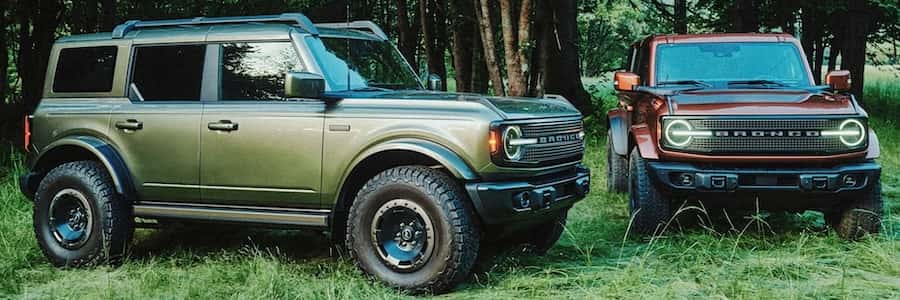
Selecting a high-capability SUV for coastal driving requires careful consideration of terrain, technology, and daily drivability. For local drivers navigating the sandy paths near the Stuart Causeway or traversing wet, muddy trails, choosing the right vehicle is essential. The 2026 Ford Bronco and the 2026 Jeep Wrangler stand as the premier choices for open-air exploration, each offering a distinct approach to utility and engineering. At Essential Ford of Stuart, our team helps buyers evaluate these differences to find the model that perfectly aligns with their lifestyle.
The 2026 Ford Bronco arrived with a modern platform designed to balance highway comfort with serious trail capability. In contrast, the 2026 Jeep Wrangler continues to rely on its traditional solid-axle design, which prioritizes off-road capability over on-road comfort. Buyers who want to experience the refined manners of the Ford Bronco can visit our physical showroom at 4000 Se Federal Hwy, Stuart, FL 34997 to take a test drive. For immediate answers to inventory questions, giving our team a call at (772) 287-0955 connects you directly with a sales specialist.
Comparing Off-Road Suspension, Ground Clearance, and Water Fording in Florida Wet Trails
Water fording and ground clearance are critical metrics when navigating flooded trails or low-lying coastal plains. The 2026 Ford Bronco is engineered with an independent front suspension, known as the High-Performance Off-Road Stability Suspension or HOSS system. This setup allows each front wheel to react independently to terrain changes, keeping the tires firmly planted and minimizing the cabin jarring often experienced in solid-axle vehicles. The Jeep Wrangler utilizes solid front and rear axles, a design that maximizes wheel articulation over extreme obstacles but results in a stiffer, firmer ride on paved surfaces.
When comparing standard configurations, the Jeep Wrangler Sport starts with 10.8 inches of ground clearance, which beats the 8.3 inches found on the entry-level Bronco. However, adding the available Sasquatch Package to the Bronco raises its ground clearance to 13.1 inches, giving it a clear advantage over the Wrangler Rubicon’s standard height. This extra clearance is particularly valuable when traversing deep ruts or uneven terrain.
For wet trail adventures, water fording depth is a deciding factor. The standard Bronco provides 33.5 inches of water fording capability, which increases to 37.0 inches when equipped with the Sasquatch Package. The Jeep Wrangler is limited to 30.0 inches of water fording across its lineup. This difference can prevent engine damage when crossing flooded access roads during the rainy season.
Evaluating the Bronco Sasquatch Package Against the Wrangler Rubicon on Loose Sand
Traction on loose sand requires a wide tire footprint and precise throttle control to prevent the vehicle from sinking. The available Sasquatch Package upgrades the Bronco with 35-inch mud-terrain tires mounted on 17-inch beadlock-capable wheels. These wider tires allow drivers to lower tire pressure safely, increasing the contact patch to float over deep, dry sand. The Jeep Wrangler Rubicon comes standard with 33-inch tires, which offer excellent grip but provide a slightly smaller footprint than the Bronco’s 35-inch setup.
When buyers visit our showroom to compare these two models, they often ask whether they need to step up to a specialized trim to handle loose beach sand, or if a standard package will get the job done. The answer lies in how the vehicle manages power delivery. The Bronco’s G.O.A.T. Modes terrain management system includes a dedicated Sand mode. This setting recalibrates the throttle sensitivity and delays transmission upshifts to maintain high engine RPMs, ensuring the momentum needed to traverse soft coastal terrain.
While the Wrangler Rubicon features highly capable front and rear electronic locking differentials, its solid-axle design is optimized primarily for slow-speed rock crawling. The Bronco’s independent front suspension and wider track width deliver superior stability during higher-speed runs across sandy flats.
Engine & Performance
Powertrain specs by trim
| Feature | Badlands | Base | Big Bend | Heritage Edition | Outer Banks | Raptor | Stroppe |
|---|---|---|---|---|---|---|---|
| Engine | 2.3L | 2.3L | 2.3L | 2.3L | 2.3L | 3.0L | 2.7L |
| Horsepower | 300 hp | 300 hp | 300 hp | 300 hp | 300 hp | 418 hp | 330 hp |
| Torque | 325 lb-ft | 325 lb-ft | 325 lb-ft | 325 lb-ft | 325 lb-ft | 440 lb-ft | 415 lb-ft |
| Transmission | 7-speed manual | 7-speed manual | 7-speed manual | 7-speed manual | 10-speed automatic | 10-speed automatic | 10-speed automatic |
| Drivetrain | Four-wheel Drive | Four-wheel Drive | Four-wheel Drive | Four-wheel Drive | Four-wheel Drive | Four-wheel Drive | Four-wheel Drive |
High-Speed Beach Runs vs Technical Trails: Bronco Raptor Versus Wrangler Rubicon 392
High-performance off-roading represents the pinnacle of factory engineering for both brands. The Raptor trim level of the Bronco features a twin-turbocharged 3.0L engine producing 418 hp and 440 lb-ft of torque, mated to a smooth-shifting 10-speed automatic transmission and a robust Four-wheel Drive system. This configuration is specifically designed for high-speed desert and sand driving, utilizing heavy-duty FOX Live Valve internal bypass shocks that adjust damping rates in real time. The Jeep Wrangler Rubicon 392 counters with a 6.4-liter HEMI V8 engine making 470 horsepower and 470 lb-ft of torque. While the Wrangler’s V8 delivers impressive straight-line acceleration and a classic muscle car exhaust note, its solid front axle and narrower track make it less stable than the Raptor during high-speed maneuvers on uneven sand.
For buyers looking at more accessible trims, the Bronco lineup offers exceptional performance across the board. The Base, Big Bend, Heritage Edition, and Badlands trims all come standard with a turbocharged 2.3L engine making 300 hp and 325 lb-ft of torque, paired with a 7-speed manual transmission and Four-wheel Drive. The Outer Banks trim features the same 2.3L engine but steps up to a 10-speed automatic transmission. If you require more power without jumping to the top-tier model, the Stroppe edition is equipped with a twin-turbocharged 2.7L engine producing 330 hp and 415 lb-ft of torque, paired with a 10-speed automatic transmission.
Daily Drivability, Cabin Tech, and Highway Comfort Around Florida Commutes
While off-road capability is a primary selling point, most drivers spend the majority of their time on paved highways and daily commutes. The independent front suspension of the Bronco delivers a composed, car-like steering feel that reduces driver fatigue during long trips. On the highway, the steering wheel remains stable and responsive, requiring minimal correction. The Wrangler’s solid front axle is prone to highway wander, meaning drivers must constantly make small steering adjustments to keep the vehicle centered in its lane.
In-cabin technology further separates these two competitors. Every 2026 Bronco comes standard with a crisp 12-inch SYNC 4 touchscreen. This system supports wireless Apple CarPlay and Android Auto connectivity, allowing you to access navigation and media without messy cords. The Jeep Wrangler starts with a smaller, less intuitive screen on its entry-level trims, requiring buyers to pay extra for larger displays and advanced wireless integration.
Wind noise is an inherent characteristic of any boxy SUV with removable body panels, but the Bronco manages this challenge more effectively. Hardtop models can be equipped with an optional sound-deadening headliner that absorbs ambient road noise, resulting in a noticeably quieter cabin than the Wrangler at highway speeds. If you are planning a transition to a highly efficient daily commuter, you can explore our new Ford hybrids and electric vehicles, browse our new Ford F-150 Lightning selection, or use our online tools to calculate your estimated monthly payments before visiting our showroom.
Towing Capacity and Utility for Florida Outdoor Boating Lifestyles
Hauling outdoor gear, trailers, and watercraft is a core requirement for active coastal lifestyles. For drivers launching boats along the Intracoastal Waterway in West Palm Beach, having a vehicle with strong utility and towing capacity is non-negotiable. The 2026 Jeep Wrangler Unlimited offers a maximum towing capacity of 5,000 pounds when properly equipped. The four-door 2026 Ford Bronco is rated to tow up to 4,000 pounds, while the high-performance Raptor increases that rating to 4,500 pounds. Although the Wrangler has a slightly higher maximum limit on paper, the Bronco’s independent front suspension provides a more stable and controlled towing experience, reducing the sway and bounce often felt when hauling loads on paved coastal highways.
When it comes to carrying gear inside the cabin, the Bronco holds a clear advantage in cargo volume. In its four-door configuration, the Bronco provides about 38 cubic feet of cargo space behind the second row, which expands to a generous 83 cubic feet when the rear seats are folded flat. The Jeep Wrangler offers a more restricted about 32 cubic feet of cargo space behind the rear seats and tops out at about 72 cubic feet with the seats folded. This extra volume in the Bronco allows outdoor enthusiasts to pack large coolers, fishing gear, and beach accessories with ease.
Dimensions & Capacity
Capacity and dimensions by trim
| Feature | Badlands | Base | Big Bend | Heritage Edition | Outer Banks | Raptor | Stroppe |
|---|---|---|---|---|---|---|---|
| Seating | 4/5 | 4 | 5 | 5 | 5 | 5 | 5 |
| Cargo | 20.6/35.6/38.3 cu ft | 20.6 cu ft | 38.3 cu ft | 35.6 cu ft | 38.3 cu ft | 35.6 cu ft | 35.6 cu ft |
| Curb weight | 4,653-5,046 lbs | 4,336 lbs | 4,523 lbs | 4,871-5,020 lbs | 4,637 lbs | 5,814 lbs | 5,334 lbs |
| Towing | 3,500 lbs | 3,500 lbs | 3,500 lbs | 3,500 lbs | 3,500 lbs | 4,500 lbs | 3,500 lbs |
| Payload | 1,243 lbs | 1,147 lbs | 1,333 lbs | 1,087-1,180 lbs | 1,283 lbs | 1,155 lbs | — |
Quick Answers to Common Florida Off-Road SUV Questions
Q: Does the 2026 Ford Bronco include a factory roadside assistance program for remote trail breakdowns?
Yes, every new 2026 Ford Bronco comes with a manufacturer-backed roadside assistance plan. This coverage lasts for 5 years / 60,000 miles and provides flat-tire changes, fuel delivery, and towing directly to an authorized Ford service center. If you encounter an emergency on your travels, you can contact Ford Roadside Assistance: 1-800-241-3673 for brand-specific expertise and coordination.
Q: Can I hose out the interior of the 2026 Ford Bronco after a muddy trail run?
Yes, select trims like the Badlands feature marine-grade vinyl seats and rubberized flooring with active drain plugs. This allows you to wash out sand, dirt, and water directly through the floorboards without damaging the cabin.
Q: Is a special license or permit required to drive the Bronco on Florida beaches?
While the vehicle itself does not require a special permit, individual coastal parks and state-managed beaches have their own specific access rules and seasonal pass requirements. Our team recommends checking local county ordinances before driving onto any designated shoreline.
Q: How long does the online pre-approval process take at Essential Ford of Stuart?
Submitting your details online typically takes less than ten minutes, and our finance team can often provide a pre-approval decision within the same business day. Bringing physical copies of your current pay stubs and driver’s license to our showroom will help expedite the final paperwork.
Q: Does the standard 2026 Ford Bronco require premium fuel to achieve its rated horsepower?
The standard EcoBoost engine runs safely on regular unleaded fuel, but it requires premium fuel to unlock its maximum rated output of 300 horsepower. Using regular fuel will slightly reduce the horsepower to 275, though low-end torque remains highly competitive for trail use.

0 comment(s) so far on 2026 Ford Bronco vs 2026 Jeep Wrangler: Which Off-Road SUV Is Better for Florida Adventures?