

How Does Florida’s Coastal Climate Affect Your Ford’s Brakes?
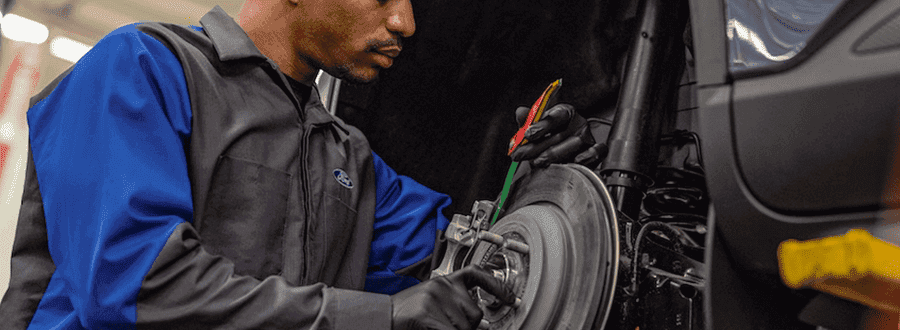
High ambient humidity and airborne ocean salt accelerate cast-iron oxidation on Ford brake rotors, caliper slide pins, and mounting hardware. Moisture traps salt deposits against bare steel, causing rapid surface rust, slide pin binding, uneven pad wear, and premature hydraulic fluid contamination. Coastal driving transforms minor cosmetic surface film into structural pitting if components remain unserviced over time, leading to costly repairs and compromised safety.
Living along coastal estuaries and waterways in Stuart means vehicle underbodies are exposed to airborne salt and dense humidity daily. Even without direct saltwater contact, salt ions suspended in humid air land on exposed metal surfaces. Cast-iron brake rotors develop a light oxide layer rapidly when parked near saltwater, while microscopic salt crusts build up on caliper slide pins and anti-rattle clips. Over time, this buildup restricts the sliding action of the brake caliper, forcing internal brake pads to drag continuously against the rotor face.
Heavy-duty vehicles like the 2026 Ford F-150 equipped with a 3.5L V6 engine and rated for up to 10,400 lbs of towing capacity exert immense clamping force on brake friction surfaces. When ocean salt impairs caliper travel, that thermal load is distributed unevenly, leading to premature rotor warping and localized hot spots. Similarly, daily commuters driving a 2026 Ford Escape with an 8-speed automatic transmission experience frequent stop-and-go pressure cycles that can drive salty moisture past aged rubber dust boots into caliper piston bores.
Preventing salt air damage requires proactive attention from specialized technicians. If you notice unusual brake noises or dragging sensations, visit our service center location on South Federal Highway or give our service team a call for a multi-point inspection.
Do Ford Motorcraft Brake Pads and Hardware Offer Rust-Resistant Protection?
OEM Ford Motorcraft® brake pads feature corrosion-resistant electrocoat backing plate finishes, stainless steel abatement clips, and engineered ceramic friction formulas designed to withstand harsh maritime salt exposure. These specialized coatings prevent rust building up beneath friction linings and maintain free pad movement inside caliper brackets.
Standard aftermarket brake pads often utilize bare stamped steel backing plates and iron-based hardware. In coastal environments, moisture migrates into the tiny boundary layer between the steel backing plate and the friction material. As rust expands beneath the pad, it forces the friction lining to lift and crack—a failure mode known as rust jacking. Motorcraft® pads counter this with protective electro-coat paint processes and specialized adhesive bonding agents that isolate bare steel from moisture intrusion.
In addition to backing plate protection, pad friction composition plays a major role in corrosion prevention. Ceramic friction formulations utilize non-metallic synthetic fibers and ceramic compounds instead of steel strands. Because ceramic pads contain no metallic iron, they will not oxidize, stick, or weld themselves to cast-iron rotors when parked in humid sea air overnight. For drivers seeking specific replacement parts, contacting our parts specialists directly ensures your Ford receives exact-fit components equipped with high-temperature stainless steel abatement clips.
| Component | Standard Aftermarket | OEM Motorcraft® Coastal Lineup |
|---|---|---|
| Backing Plate Protection | Bare Stamped Steel / Basic Primer | Anti-Corrosion Electro-Coat Finish |
| Abatement Hardware | Zinc-Plated Mild Steel | Stainless Steel Abatement Clips |
| Friction Formulation | Semi-Metallic (Iron Filings) | Engineered Ceramic Compounds |
| Moisture Resistance | Moderate (Prone to Rust Jacking) | High (Isolated Adhesive Layer) |
How Often Should Ford Brake Fluid Be Flushed in Coastal Florida?
Ford brake fluid should be flushed every 2 to 3 years or every 30,000 miles in coastal Florida environments to prevent internal hydraulic system corrosion. High ambient humidity allows moisture to seep past rubber brake hoses and master cylinder reservoir caps, lowering the fluid’s boiling point and pitting internal caliper pistons.
Automotive brake fluid is inherently hygroscopic, meaning it actively absorbs water vapor straight out of the surrounding atmosphere. In low-humidity regions, fluid can last significantly longer without absorbing unsafe levels of water. However, under constant exposure to warm, humid coastal air, moisture saturation occurs much faster. Water suspended in brake fluid lowers the boiling threshold from roughly 400 degrees Fahrenheit down to dangerous levels near 212 degrees Fahrenheit.
When heavy braking creates elevated heat, water trapped inside contaminated fluid turns to steam. Because steam compresses while liquid does not, drivers experience a soft pedal or sudden loss of braking response—a condition known as vapor lock. Beyond boiling risks, water suspended in the hydraulic lines corrodes internal master cylinder bores, ABS hydraulic control units, and caliper pistons from the inside out. Following a regular 30,000-mile fluid exchange schedule keeps fresh DOT 4 low-viscosity brake fluid circulating throughout your Ford’s hydraulic system.
What Are the Warning Signs of Coastal Brake Corrosion and Hardware Binding?
Warning signs of coastal brake damage include high-pitched squealing, grinding noises during initial application, a pulsating brake pedal, uneven pad wear, and the vehicle pulling to one side. Persistent orange rust flaking along rotor hats or fluid wetness near wheel wells indicates advancing corrosion requiring immediate inspection.
Driving near ocean shorelines and waterfront marinas in Stuart often leaves a residual salt layer across brake assemblies. While a thin coat of orange surface dust after standing in humid weather is normal and wipes clean within your first few stops, structural corrosion creates distinct audible and tactile symptoms:
- Squealing or Harsh Metallic Screeching: Salt crust build-up on stainless steel clip channels pins the brake pad at an angle, causing edge contact against the rotor face.
- Vehicle Pulling Under Braking: Corroded caliper slide pins freeze in place, preventing one caliper from clamping while the opposite wheel operates normally.
- Steering Wheel Vibration: Deep rotor pitting and flaking edge scale alter rotor thickness, causing pedal pulsation under moderate braking pressure.
- Spongy Brake Pedal Travel: Moisture accumulation within hydraulic lines creates air bubbles or degrades rubber flex lines near salt-exposed wheel wells.
Our service advisors frequently observe light surface film forming on rotors overnight near local waterways, which is why our technicians evaluate slide pin mobility alongside pad thickness during every routine visit. Ignoring bound hardware accelerates pad wear on one side of the axle, cutting pad life in half and damaging rotor surfaces.
Best Maintenance Practices and Inspection Schedules for Coastal Ford Drivers
Coastal Ford vehicles require comprehensive brake inspections every 6 months or 5,000 to 7,500 miles, combined with frequent fresh-water underbody rinses. Rinsing wheel wells and brake assemblies after driving near marine spray removes residual salt deposits before oxidation sets into calipers and brake lines.
Establishing a disciplined wash routine is your first line of defense. After visiting coastal boat launches or oceanfront highways, use a fresh-water hose to rinse out the inner barrel of each wheel and the lower chassis components. Avoid direct high-pressure spray directly onto delicate rubber caliper dust boots, as high pressure can force salty water past sealed boots into slide pin grease cavities.
When operating vehicles engineered for coastal recreation—such as the 2026 Ford Bronco Sport featuring a 2.0L EcoBoost engine and a SelectShift® transmission rated for 2,700 lbs of towing capacity—routine maintenance should cover every component within the brake system:
- Slide Pin Lubrication: Technicians clean slide pins and reapply high-temperature silicone grease to prevent caliper binding.
- Rotor Flake Removal: Scaling rust along rotor hat edges and cooling vanes is cleaned off to preserve balance and heat dissipation.
- Brake Line Inspection: Steel lines running along the frame rails are inspected for flaking paint, fluid wetness, or rust scaling.
- Electronic Parking Brake Service: Sealed electric motor actuators are checked to ensure salt crust has not accumulated around mechanical apply levers.
Proactive care stops corrosion long before structural integrity is compromised. You can protect your vehicle by scheduling a full brake inspection online with our certified service team.
Common Questions About Coastal Ford Brake Maintenance
Q: Why do my Ford brake rotors look rusty after parking overnight?
High atmospheric humidity forms a thin surface film of iron oxide on bare cast-iron rotors overnight. This light orange dust typically wipes clean during your first few brake stops. Persistent rust scaling, deep pitting, or grooving along the rotor face requires a professional inspection to determine if rotor resurfacing or replacement is necessary.
Q: Are ceramic brake pads better for vehicles exposed to ocean salt air?
Ceramic friction materials contain dense non-metallic compounds that resist oxidation and pad-to-rotor bonding when parked near marine environments. They produce non-abrasive dust and minimize pad friction welding compared to standard semi-metallic friction pads, keeping rotor faces smoother over extended periods.
Q: How does salt air affect Ford electronic parking brakes?
Ford Electronic Parking Brake systems use sealed electric motor actuators mounted directly to rear calipers to isolate electrical components from moisture. However, salt crust buildup on mechanical slider channels can still bind the caliper mechanism over time if unrinsed during routine vehicle washes.
Q: Can corrosion cause my vehicle to pull to one side while braking?
Seized or corroded caliper slide pins prevent hydraulic pressure from releasing evenly across both front wheels. When one side drags or fails to clamp properly, your Ford pulls toward the side with functioning hardware, accelerating uneven pad wear and creating erratic steering feedback.
Q: What is the difference between surface rust and structural rotor damage?
Surface rust is a superficial layer of oxidation that disappears after normal braking applications. Structural damage occurs when ocean salt causes deep rotor pitting, edge flaking, or rotor hat thinning that compromises structural thickness and thermal dissipation capacity. Dedicated Ford service teams can verify remaining safety margins by learning about our certified technicians and facility capabilities.
Schedule Expert Ford Brake Maintenance at Essential Ford of Stuart
Protecting your Ford’s braking system against Florida’s harsh salt air requires specialized factory knowledge, genuine OEM parts, and regular maintenance. From complete hydraulic flushes to inspecting caliper slide pin boots and installing corrosion-resistant Motorcraft® pads, our factory-trained service team ensures your vehicle maintains maximum stopping power across every mile.
Do not wait for high-pitched squealing or pedal pulsation to signal severe rotor pitting and hardware damage. Visit our service center location on South Federal Highway to drop off your vehicle, or give our service team a call to reserve your next inspection appointment today.
Prices and MSRP referenced in this article are estimates for informational purposes only and do not constitute an offer to sell. See dealer for complete details.
Fuel economy estimates shown may differ from official EPA ratings and should not be relied upon as a guarantee of actual vehicle performance.

0 comment(s) so far on How Does Florida’s Coastal Climate Affect Your Ford’s Brakes?